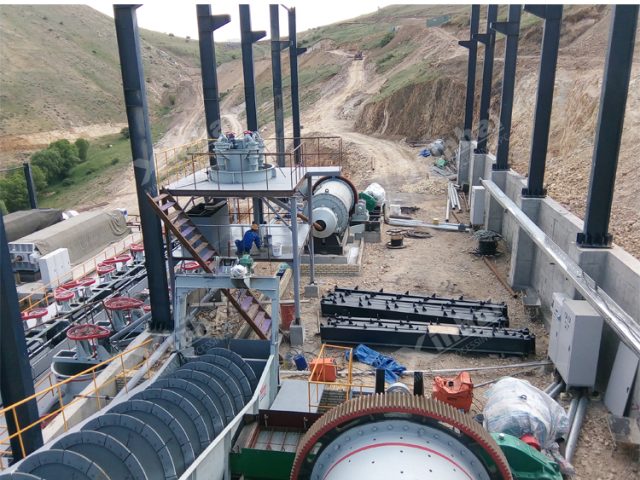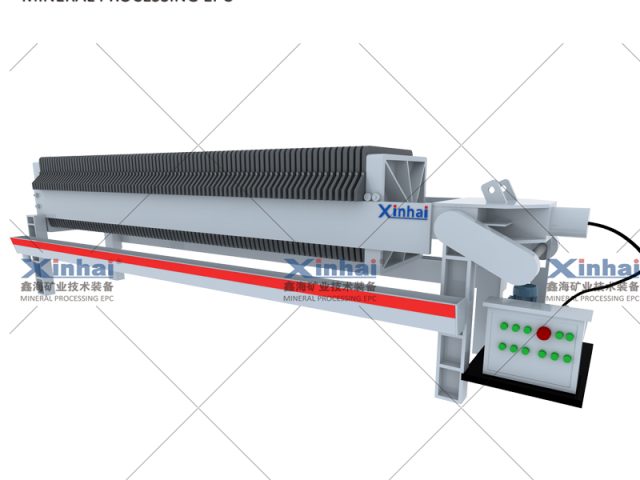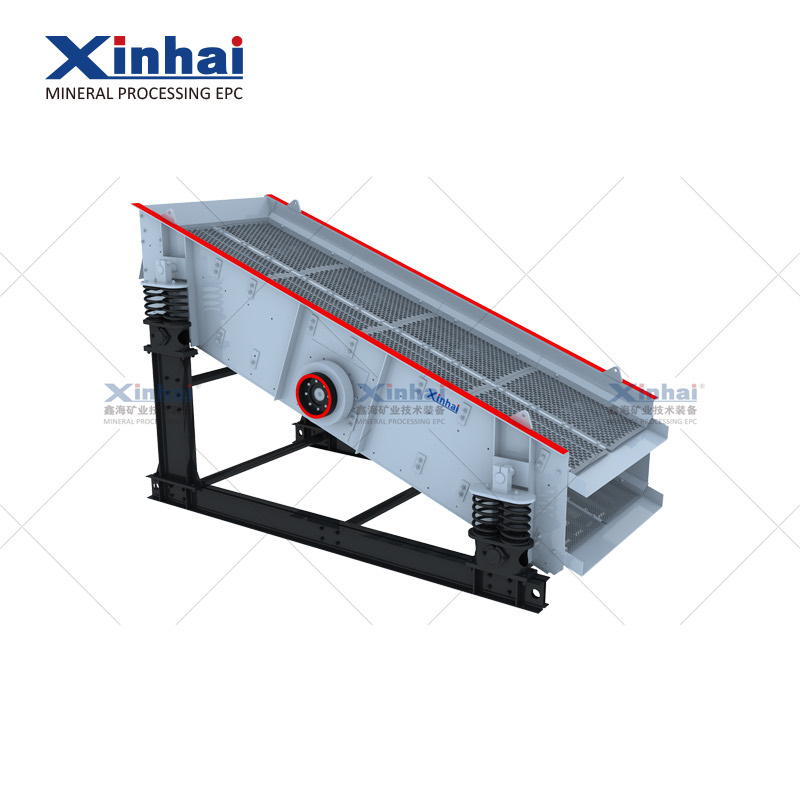
A vibrating screen uses oscillating motion to separate particles by size on a screening surface. The main types—circular, linear, banana, and high-frequency—each suit different duties from general sizing to fine dewatering. Correct sizing balances feed rate, required cut size, open area, and deck motion to avoid blinding and pegging.
A vibrating screen is a machine that separates bulk material into size fractions by passing it over a screen surface that oscillates rapidly. The motion stratifies the bed: finer particles sink to the deck and pass through the openings, while oversized particles travel across the deck and discharge at the end. You’ll find vibrating screens in crushing circuits, grinding circuits, dewatering stations and final product sizing. The main types—circular, linear, banana and high-frequency—each solve a different screening problem. This guide explains how those types differ and gives you a repeatable method to size one. For a broader look at how screens fit into a mineral processing flowsheet, see our screening equipment overview.
What a vibrating screen does
A vibrating screen is a mechanical classifier that uses oscillating motion to separate particles by size. The screen deck is a surface with many apertures of a chosen size. When the deck shakes, particles smaller than the apertures fall through as undersize. Particles larger than the apertures travel along the deck and leave as oversize. Stratification is the key: the vibration causes the bed of material to loosen, letting fine particles migrate downward while coarse particles rise to the top. Without good stratification, fine particles would ride on top of coarse ones and never reach the deck. That’s why screen motion, deck angle and feed rate all matter together. For background on particle separation mechanisms, see Wikipedia’s article on mechanical screening.
The four main vibrating screen types
Different screen motions suit different duties. You’ll choose a screen type after you know your feed rate, cut size and moisture level. Here are the four workhorses.
Circular vibrating screen
A circular vibrating screen is a type of inclined screening machine whose screen deck moves in a circular orbit. The deck is mounted on an angle, so the circular motion throws material up and forward along the deck. That combination stratifies the bed and carries oversize to the discharge end. Use it for general sizing after primary or secondary crushing. Xinhai’s circular vibrating screen line is built for exactly this inclined general sizing duty. It’s often paired with a vibrating grizzly feeder at the feed end to scalp oversize before fine screening.
Linear vibrating screen
A linear vibrating screen refers to a horizontal or nearly horizontal screen whose deck moves in a straight line, usually driven by two eccentric shafts rotating in opposite directions. The straight-line motion makes it effective for dewatering, desliming and fine sizing where you need a long retention time. You’ll see linear screens in dense media recovery, tailings dewatering and final product washing. Because the deck is nearly horizontal, material moves forward only when the stroke throws it, so you can keep a deep bed on the deck and give particles many chances to find an opening.
Banana screen
A banana screen is a multi-slope screen that starts steep at the feed end and flattens toward the discharge end. That variable slope increases capacity by rapidly thinning the bed at the feed zone, then slowing material for accurate separation at the discharge. The steep feed section moves a large volume quickly, so you can handle high tonnages without overloading the deck. Use a banana screen when your feed rate is high and you need a sharp cut at a relatively fine size.
High-frequency screen
A high-frequency screen is a type of vibrating screen that operates at higher speed and lower amplitude than conventional screens. It applies the vibration directly to a fine screen panel, which keeps near-size particles from blinding the openings. You’ll use a high-frequency screen for fine cuts and for dewatering fine products such as mineral concentrates or sand. The direct panel vibration also reduces the energy that reaches the supporting structure, which helps with screen panel life.
The physical variables that decide sizing
Sizing a vibrating screen isn’t guesswork. It’s a balance of six physical variables. Each one trades off against the others, so you’ll iterate rather than solve once.
Feed rate is the mass or volume of solids delivered to the screen per unit time. A higher feed rate needs a wider deck or a steeper angle to keep the bed depth from getting too thick.
Required cut size is the particle size at which you want to split the feed into oversize and undersize. It’s the aperture size that defines your product. Choosing the cut size correctly means understanding what the downstream process can tolerate.
Open area is the percentage of the deck surface that is actually holes or slots rather than solid wire or panel material. Higher open area means more capacity for a given deck size, but it also reduces the durability of the screening surface.
Deck angle is the slope of the screen surface from feed to discharge. Steeper angles move material faster and increase capacity, but they reduce separation accuracy. Shallow angles give sharper cuts but lower throughput.
Stroke and speed describe the amplitude and frequency of the deck’s motion. The combination determines how aggressively the bed is thrown and stratified. Too little stroke won’t stratify; too much stroke can throw particles too far and reduce contact time with the deck.
Moisture is the amount of water in the feed, usually expressed as a percentage by weight. Surface moisture on particles creates liquid bridges that make fine particles stick together and to the deck. Moisture above a few percent can turn a dry screen into a plugged one unless you choose the right media and motion.
Why near-size particles and moisture kill screening efficiency
Near-size particles are particles whose size is close to the screen aperture—either slightly smaller or slightly larger. They are the most difficult particles to screen because undersize near-size particles need many opportunities to find an opening, while oversize near-size particles tend to wedge in the apertures. When a feed contains a high proportion of near-size particles, you’ll need a longer screen, a larger open area, or a different screen type to keep efficiency up.
Moisture makes everything worse. Fine wet particles clump together and form a cake on the deck. That cake blocks the apertures and prevents undersize from passing. The same moisture also encourages blinding and pegging. You can fight moisture with a linear screen and spray water, or with a high-frequency screen that vibrates the panel itself to shed the cake. But you can’t engineer moisture away by simply increasing motor speed—you have to design the screen around the real feed conditions.
Single deck vs multi-deck: how to decide
A single-deck screen makes one separation and produces two products: oversize and undersize. A multi-deck screen stacks two or more decks in one frame, so you get three or more products from one machine. Which one you choose depends on your flowsheet and your plant layout. Use this ordered decision sequence:
- Define the number of size fractions you need. If you need only a coarse reject and a fine product, one deck is enough.
- Check the available height in the building. Multi-deck screens are taller and may not fit under existing conveyors.
- Compare the capital cost of one multi-deck unit against multiple single-deck units. Multi-deck units usually cost less per deck area but are harder to access for maintenance.
- Consider access for screen panel replacement. On a multi-deck unit, the lower decks are difficult to reach, so you’ll pay more time in maintenance.
- Confirm the feed distribution. Multi-deck screens need a distributor to spread feed evenly across the top deck; otherwise the lower decks see uneven loading.
Most plants use a multi-deck screen when they need three or more size fractions in one stage. You’ll see single decks more often in scalping or dewatering where only one cut matters.
Screening media: woven wire vs polyurethane vs rubber
The screen deck isn’t just a sheet with holes. It’s a consumable media with a direct trade-off between open area and wear life. Three common media types are woven wire, polyurethane and rubber.
Woven wire has the highest open area because the wires are thin. That gives you high capacity and sharp separation. The downside is short life on abrasive or wet feeds, and the wires can break or stretch. You’ll use woven wire for dry, non-abrasive feeds where open area is critical.
Polyurethane panels have lower open area than woven wire but last much longer in abrasive circuits. They also resist blinding because the panels flex under vibration, which pushes near-size particles out. Use polyurethane for wet, abrasive duties such as mill discharge screening.
Rubber panels are similar to polyurethane in wear resistance but are softer and quieter. They work well for coarse, heavy feeds where impact damage is a concern. Their open area is the lowest of the three, so they need a larger screen for the same capacity.
The right media is a compromise. You’ll rarely maximize both open area and wear life at the same time. Choose the media that stays alive long enough to avoid frequent shutdowns, then size the screen around its open area. Sieve analysis, the lab method for measuring cut sizes, is explained in this reference.
Common failure modes and how to avoid them
Three failure modes show up over and over again on vibrating screens. You can design most of them out if you know the causes.
Blinding is the condition where fine, wet material plugs the screen openings from the underside or forms a cake on the deck, reducing effective open area. Blinding is most common on fine, damp feeds. To prevent it, choose a screen type with high panel acceleration, use a polyurethane or rubber panel that flexes, or add spray water above the deck.
Pegging is when individual near-size particles get stuck in the apertures, blocking them one by one. Pegging differs from blinding because it’s caused by particle shape and size rather than moisture. You can reduce pegging by using tapered apertures, by increasing stroke, or by choosing a screen motion that keeps particles bouncing rather than sliding.
Structural cracking from wrong stroke happens when the screen’s designed stroke and speed are changed without recalculating the dynamic loads. The deck, side plates and support springs see higher alternating stresses. Cracks often start at weld toes or bolt holes. Always stick to the manufacturer’s recommended stroke and speed, and don’t modify the screen frame without a structural reanalysis.
A practical sizing sequence
Bring the variables together with this ordered method. It’s the same sequence a process engineer follows when specifying a new screen.
- State the design feed rate in tonnes per hour on a dry solids basis.
- Choose the required cut size from your process flow sheet and name the product you’re protecting downstream.
- Select the screen type based on the cut size and moisture. Use a circular screen for coarse to medium dry cuts, a linear screen for wet dewatering, a banana screen for high tonnage, or a high-frequency screen for fine cuts.
- Estimate the open area and panel type from the feed abrasiveness and moisture. Pick woven wire for maximum open area, polyurethane for wear and anti-blinding, or rubber for impact.
- Determine the deck angle, stroke and speed from the manufacturer’s recommendations. Don’t guess these—use the screen supplier’s data.
- Check the bed depth at the discharge end using the feed rate, bulk density and deck width. The bed should be thin enough to stratify but thick enough to avoid bouncing particles off the deck.
- Verify that moisture and near-size content won’t blind the deck. If they will, adjust media or stroke, or add water sprays.
- Review the structural load path and confirm the screen frame, springs and support structure are rated for the chosen stroke and speed.
This sequence won’t give you a perfect screen on the first pass. But it will get you close enough for a manufacturer to confirm the final selection. If you’re not sure where to start, our engineers can help you build a screening circuit that fits your plant’s feed conditions.
Frequently Asked Questions
What is the difference between a circular vibrating screen and a linear vibrating screen?
A circular vibrating screen uses an inclined deck with circular motion to throw material forward, making it good for general dry sizing. A linear vibrating screen uses a horizontal deck with straight-line motion, which gives longer retention time and is better for dewatering, desliming and fine wet sizing.
How do I choose between a single-deck and a multi-deck vibrating screen?
Choose a single-deck screen when you need one cut and two products, such as scalping oversize from a crusher feed. Choose a multi-deck screen when you need three or more size fractions from one machine, but first check the available height and access for panel replacement because lower decks are harder to service.
What causes screen blinding and pegging?
Blinding is caused by fine, wet material caking on the deck and blocking apertures. Pegging is caused by individual near-size particles wedging in the openings. Both reduce effective open area and screening efficiency. Use panel flexing, higher acceleration, spray water, or tapered apertures to reduce them.
Which screen media is best for abrasive ore?
Polyurethane or rubber panels are usually better than woven wire for abrasive ore because they last longer under impact and abrasion. They have lower open area than woven wire, so you may need a larger screen area for the same capacity, but the longer panel life often justifies the trade-off.