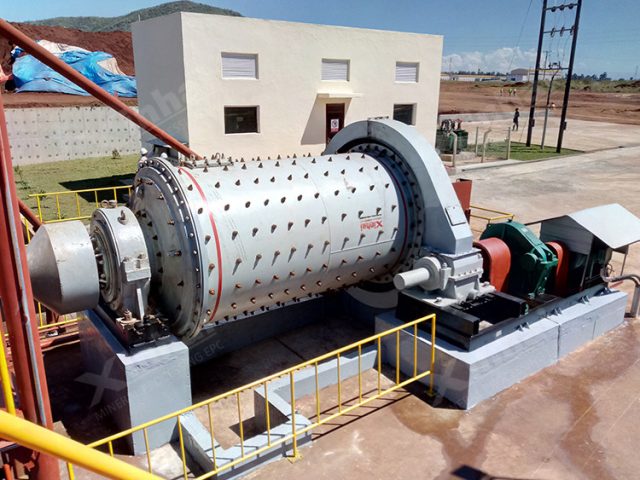
The quoted number on a hammer crusher is the cheap part; the hammers, grates and liners you buy later are the number that matters.

Say a mine owner asks, ‘Why is your hammer crusher price different from the one I found online?’ That question never has a short answer. The machine itself looks simple. A steel rotor swings hammers inside a lined chamber. But the price you see on a one-page quote is only the start.
The hammer crusher price a supplier gives you depends first on duty class, rotor size, motor power and hammer metallurgy. It’s not like buying a standard motor. Every competent supplier will ask what you’re crushing, how much per hour, and what product size you need. If they don’t, you’re not getting an engineering quotation. You’re getting a guess.
You’ll find this article useful if you’re comparing hammer mill quotations, planning a limestone or coal circuit, or wondering where the real money goes after the first year. Xinhai operates manufacturing facilities for mining equipment, including crushing machinery, with a factory area of 110,000 m² according to company-published figures. That matters because a supplier who makes its own machines and a trader who forwards an enquiry produce very different quotations.
How hammer crusher pricing actually works
A hammer crusher is a rotating impact machine. Feed enters the top, hammers strike it, and product falls through grate bars or screen openings. The price isn’t set by a catalogue page alone. It’s set by three questions: how big is the feed, how hard and abrasive is the rock, and how many tonnes per hour do you need.
Rotor diameter and width drive the frame size. Say a machine built to accept 400 mm feed and turn out 50 t/h. It won’t share many parts with one taking 800 mm feed at 200 t/h. Motor power follows the rotor. Bigger rotor, higher inertia, more power. You’ll see anything from a few kilowatts on a lab hammer mill to several hundred kilowatts on a primary heavy-duty machine. We don’t publish specific model numbers here because every site is different.
Hammer metallurgy changes the quote more than anything else on the host side. Low-chromium alloy hammers are common on clean coal or gypsum. High-chromium or composite hammers are ordered when there’s silica in the feed. That choice can take the hammer set from an afterthought to the single biggest item in the machine cost. A bare-machine quote isn’t the total investment either. You need base frame, drive, guards, feed and discharge chutes, perhaps a local control panel.
So when a buyer asks ‘what’s your hammer crusher price?’, the honest answer starts with another question: ‘What are you feeding it?’
What a complete hammer crusher quotation must include
A proper quotation separates the machine from everything else. If you get a two-line email with a price, ask for the full breakdown. Here’s the minimum checklist I make every plant buyer work through.
| Component group | What to check |
|---|---|
| Crusher host | Frame, rotor assembly, hammer pins, full hammer set, liner plates, grate bars and adjustment mechanism |
| Drive system | Motor, V-belts or direct coupling, pulleys, mounting bracket, belt guards |
| Structural components | Base frame or skid, anchor bolts, anti-vibration pads |
| Ancillaries | Feed chute, discharge chute, safety guards, hopper or wear liners |
| Spares package | Recommended start-up hammers, grates, liners, pin extractor tool |
| Documentation | General arrangement drawing, electrical schematic, parts list, foundation loads |
| Delivery scope | Ex works, FOB or delivered terms, packaging, lifting points, installation and commissioning responsibility |
Wear parts: the real long-term cost driver
The purchase price is a down payment. Your long-term spend lives in hammers, grate bars and liner plates. On abrasive feed, those parts can be replaced several times a year. Hammers take the impact. Grate bars and liners take the sliding wear. If you crush limestone with high silica, the wear rate climbs fast. High-chromium alloy hammers give longer life but cost more up front. The right choice depends on tonnes of product per hammer set, not on the per-set invoice.
Grate openings control product top size. Smaller openings give finer product but hold material in the chamber longer, which increases wear on both hammers and grates. Opening the grates to pass material faster often reduces wear but coarsens the product. That trade-off is exactly why a supplier needs your product specification before quoting.
The AP-42 background document for crushed stone processing recorded raw limestone moisture below one per cent in uncontrolled runs and one per cent or above in controlled runs (source). That matters because wet, sticky feed smears on the grates and causes blinding. You’ll lose capacity and force the hammers to work a packed chamber. So moisture is a wear and throughput issue, not just a handling problem.
When a hammer crusher is the wrong choice
Hammer crushers like impact breakage. They work well on brittle, medium-hardness materials like limestone, coal, gypsum and slag. They are a poor choice on hard, tough rock with high silica content. The hammers don’t cut it. They wear blunt, throughput drops, and replacement cost eats the budget. If you’re looking at a quartzite, river gravel or high-silica sandstone, you’re better off with a jaw crusher for primary duty and a cone crusher for secondary. Here’s a comparison of cone and jaw crushing stages. For very hard, abrasive feeds, a roll crusher can also be suitable. The key is to test the rock first. Don’t let a low hammer crusher price pull you into a machine that will spend more time down than running.
Clay and moisture are another red flag. Sticky feed clogs the grate area and reduces capacity to a crawl. If a quarry has high clay, wet feed, a hammer crusher may need an apron feeder or even a roll crusher instead. The main point is simple: ask the supplier what happens to wear life on your exact rock. If they can’t answer, walk away.
Standard vs heavy-duty hammer crushers
Standard hammer crushers, often called PC models, are used for secondary or tertiary crushing behind a jaw. They accept medium feed sizes and generally have lighter frames and rotors. Heavy-duty machines, sometimes labelled PCZ, are built for primary crushing with larger feed openings, reinforced frames and heavier rotor assemblies.
The price difference between the two is not mark-up. It’s mass and power. A high-inertia rotor stores more kinetic energy, so it can take bigger feed lumps and keep going on intermittent rock. A bigger motor lets it do that without stalling. You’ll see the difference in the frame plate thickness, bearing sizes and hammer pin diameter. When you compare two quotations, ask for the rotor weight and the moment of inertia. A heavy rotor is not wasted steel. It’s what keeps the crusher from choking on a big lump.
Key technical parameters to specify before requesting a quote
If you want a real quotation, give the supplier these numbers. If you don’t know them, say so. The supplier will help you measure or estimate.
- Maximum feed size in millimetres
- Required capacity in tonnes per hour
- Target product top size or P80
- Material type, hardness and abrasiveness
- Moisture content and clay content
- Open or closed circuit configuration
P80 is the size 80 per cent of the mass passes. That one number often drives the grate opening design. Standard catalogue parameters are okay for a first look. But no one should size a hammer crusher from a catalogue alone. Ore properties and feed gradation change throughput. Final selection requires testwork and manufacturer confirmation. Ask the supplier to confirm the predicted capacity on your material, not on a clean limestone sample. And ask what happens if the actual feed size is bigger than you thought. For a wider look at plant design, see the mineral processing plant design guide.
Hammer crusher types and their applications
Hammer crushers split into several families. Single-rotor machines are the most common for medium-duty work. Double-rotor machines handle higher capacity or sticky feed by giving the material two impact zones. Reversible hammer crushers let you flip the rotor to use both hammer faces before replacement. Vertical shaft hammer mills, ring hammer crushers and swing hammer mills each suit different feed shapes and product requirements.
You’ll find fixed hammer crushers in stationary plants and mobile versions on track or wheel mounts. The applications are consistent: medium-hardness brittle materials. Limestone for cement and aggregate, coal and gypsum for power and industrial use, and slag for recycling operations. The USGS defines the construction aggregates industry as those companies that mine and process crushed stone and construction sand and gravel (source). Hammer crushers appear in many of those crushed stone plants, usually on the softer end of the deposit.
Frequently Asked Questions
How much does a hammer mill cost?
We don't publish a fixed price because it depends on rotor size, motor power, hammer metallurgy and the exact material you're crushing. A small mill for laboratory coal testing and a heavy-duty primary hammer crusher share almost nothing. Get a quote after you've specified feed size, capacity and product target. A supplier who quotes without asking about the rock is guessing.
What factors determine hammer crusher price?
Duty class first. Then rotor diameter and width, motor power, frame plate thickness, hammer alloy, grate opening design and the scope of supply. Whether the quote includes the drive, base frame, chutes, guards and spares makes a big difference. Delivery terms and installation responsibility change the comparison too.
What is the average price of a concrete crusher?
There isn't a meaningful average. Concrete crushing is usually done with a jaw crusher for primary reduction and a cone or impact crusher for secondary. A machine that processes 50 t/h of reinforced demolition waste isn't comparable to one that handles 200 t/h of clean slab. Ask for a quote based on your feed size, rebar content and product requirement.
How much does a crusher cost?
The answer depends on type and size. A hammer crusher for soft limestone has a different cost base from a cone crusher for hard rock or a jaw crusher for primary duty. Compare quotations only after you've normalised the scope: motor size, wear material, spares package, delivery and commissioning. The crusher host is one line among many.