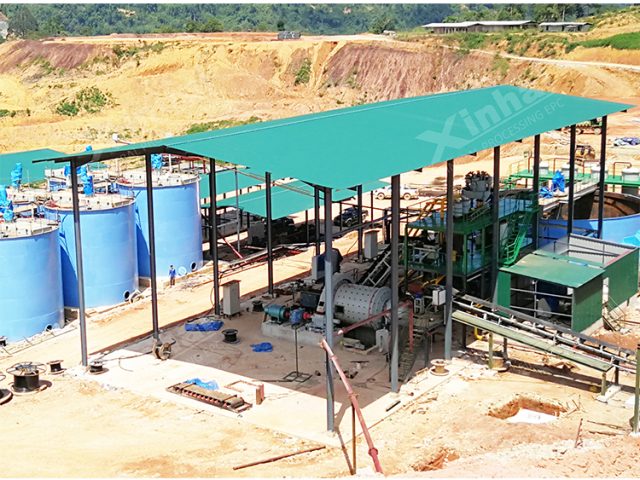
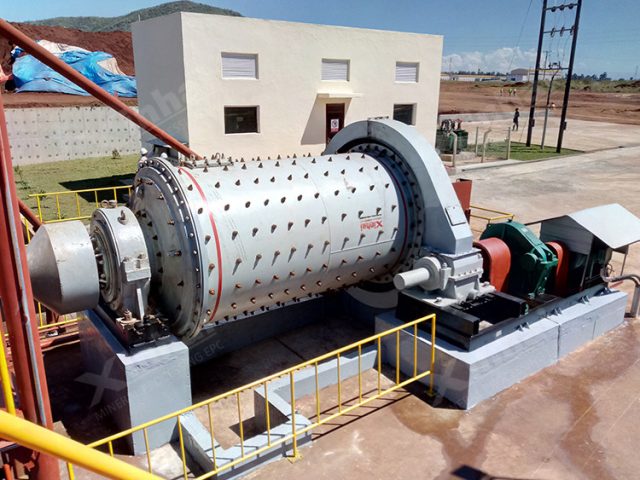
The four main mine tailings storage options are conventional wet tailings storage facilities (TSF), thickened tailings, paste tailings, and dry stack. Each differs in water content, dewatering equipment, footprint, and closure requirements. The choice depends on climate, topography, tailings rheology, and economic drivers.
Conventional Wet Tailings Storage
Conventional wet tailings storage sends the full mill tailings stream, as a dilute slurry, to an engineered impoundment. The solids settle, and clarified water is recovered from the pond surface. This is the most common mine tailings storage approach worldwide because it needs the least dewatering equipment. You’ll often see a thickener ahead of the tailings facility to recover as much water as possible before pumping, but the slurry still behaves like water.
The tailings facility for wet storage relies on embankment dams, often raised upstream, centreline, or downstream. The pond covers a large area, and the dam must hold back both solids and a large volume of free water. That’s a key difference from the other options: the dam is acting as a water-retaining structure, not just a solids stack.
Water recovery is limited by evaporation and the hydraulic conductivity of the settled solids. In arid climates that’s a real cost driver; you’ll lose water to the atmosphere and spend more on makeup water. In wet climates, excess water must be treated and discharged under permit. Closure means a stable, contained pond, often capped after consolidation, with long-term monitoring and water treatment if needed.
Thickened Tailings
Thickened tailings are dewatered to a higher solids content than conventional slurry, high enough to eliminate free water and produce a non-segregating slurry that can be deposited in a gently sloping stack. A deep cone thickener is the workhorse here, though high-compression thickeners can also do the job.
Because the thickened tailings don’t segregate, you don’t get a large supernatant pond. The tailings form a beach with a low angle, and the water that remains is held within the solids matrix. That means the tailings facility has a smaller impermeable footprint, and the dam, if any, is lower. Many thickened stacks are built as paddock or valley fills.
Water recovery is better than wet storage because more water is removed before discharge. It’s not as high as paste or filtration, but it’s a solid middle ground. Operating costs creep up because of the higher thickener underflow density target, which often requires flocculant dosing and careful control. Closure is easier: the surface crusts over, and the stack can be re-vegetated with less water ponding.
Paste Tailings
Paste tailings are a further step: dewatered to the point where the material has a slump that prevents segregation, and can be transported by positive displacement pumps without separating into solids and water. That’s a definition the industry uses, though the exact slump range varies by site. Paste is a thick, homogeneous mass that doesn’t release water when pumped or deposited.
Making paste requires more than a thickener. You’ll often add vacuum filtration or a filter press to take the thickened underflow and squeeze out more water. Sometimes you can achieve paste directly from a high-density thickener, but that depends on particle size and clay content. The key is to get the solids high enough that the yield stress exceeds the gravity-driven segregation force.
Paste storage uses no dam in many cases. The material is deposited in layers from a central point, building a self-supporting stack. Water recovery is very high, often close to what dry stack achieves, but not quite. Footprint shrinks compared to thickened tailings. Capital costs are higher for dewatering equipment, and operating costs include more power for filtration and pumping. Closure is simpler still: the stack is stable, has low permeability, and can be covered with topsoil and vegetation.
Dry Stack
Dry stack means the tailings are filtered to a moist, soil-like cake, then transported by truck or conveyor and spread in layers, compacted, and stacked like a conventional earthfill. This is the most water-efficient mine tailings storage method. The filter press is the classic dewatering device, but vacuum disc filters and belt filters also work for some ores.
Because the tailings are nearly dry, there is no pond, no dam for free water, and the tailings facility footprint can be the smallest of all four options. Water recovery is the highest: most of the process water returns to the mill directly from the filtration circuit. That’s a big advantage in arid regions or where water rights are constrained.
The downsides are real. Filtration is capital-intensive, and the operating cost per tonne of tailings is the highest. You’ll also need material handling systems—conveyors, trucks, dozers—that add cost and maintenance. Closure, however, is straightforward: the stack is already a stable landform, can be contoured and re-vegetated, and has little long-term seepage risk if the foundation is prepared correctly.
Selecting the Storage Option
Choosing between conventional, thickened, paste, and dry stack starts with three site-specific inputs: climate, topography, and tailings rheology. You’ll rarely find one answer that works everywhere.
Climate drives water availability and net evaporation. If water is scarce, dry stack or paste makes sense because you recover nearly all of it. If rainfall exceeds evaporation, ponded water becomes a long-term liability, pushing you toward thicker options. Topography matters: a wide, flat valley can tolerate a large wet TSF, while a narrow canyon or steep slopes favour stacking methods that need less flat area.
Tailings rheology is the third leg. Fine-grained, clay-rich tailings are hard to dewater and may never reach true paste without excessive chemical conditioning. Coarse, sandy tailings drain quickly and are well suited to dry stack. A test work program, including rheology measurements and dewatering trials, is the only way to know for sure. Xinhai’s thickening and dewatering equipment is often sized after such tests.
Here’s a simple three-step process you can follow:
- Characterise the tailings rheology and dewatering response through bench and pilot tests.
- Map climate, topography, and water balance constraints.
- Run a life-of-mine cost model for each storage option, including closure and post-closure care.
Cost drivers also matter. Conventional wet storage has the lowest capital cost for dewatering but the highest long-term closure and water treatment costs. Dry stack flips that: high capital and operating cost now, low closure cost later. Thickened and paste sit in between. You’ll need to run a life-of-mine cost model, not just a capex comparison.
Dewatering Equipment Each Option Implies
Each storage option is defined by its dewatering step. Conventional wet storage uses a thickener at most, sometimes nothing beyond a tailings pump. Thickened tailings require a high-rate or deep cone thickener with flocculant dosing to reach a non-segregating underflow. Paste tailings add a filter press or vacuum filter after the thickener, or use an ultra-high-density thickener. Dry stack always uses some form of filtration—filter press, drum filter, or disc filter—followed by mechanical handling.
The thickener versus filter press decision is a classic project fork. Thickeners are cheaper per tonne and easier to operate but leave more water in the tailings. Filter presses produce a drier cake but cost more up front and per cycle. You’ll also need slurry pumps that can handle high-density, high-yield-stress materials; paste and thickened tailings often require positive displacement pumps rather than centrifugal ones.
Closure and Long-Term Care
Closure planning starts at the design stage, not after the fact. Conventional wet tailings facilities demand the most closure effort: dewatering the pond, stabilizing the dam, installing a cover, and monitoring groundwater for decades. Thickened and paste stacks consolidate faster, have less free water, and re-vegetate more readily. Dry stacks are essentially ready for closure as they are built, though you’ll still need to contour slopes and establish drainage.
Regulators increasingly look at closure cost as a key factor. Mining companies that choose dry stack often do so because the long-term liability is lower. That’s a strong argument when the tailings contain reactive minerals or potential contaminants. A well-designed tailings facility, whichever method you choose, must pass the test of time.
For external context, the Canadian Institute of Mining, Metallurgy and Petroleum (CIM) publishes tailings management guidelines that many engineers follow. The World Gold Council also provides resources on responsible tailings management for gold operations. These aren’t the only sources, but they’re good starting points for your own review.
At Xinhai, we see tailings management as part of the EPC scope, not an afterthought. Our design team includes tailings specialists who work from the initial test work through to closure planning. According to Xinhai’s published figures, the company reports more than 600 EPC+M+O projects and supports single projects up to 50,000 t/d. That scale matters when you’re looking at a tailings system that has to handle thousands of tonnes per day.
If you’re evaluating a new project, start with a tailings characterisation program. Then compare the four storage options side by side on water recovery, footprint, capital and operating costs, and closure effort. Don’t let the capital cost of dewatering equipment scare you away from dry stack or paste; the operating and closure savings can flip the decision.
Need help? Talk to our tailings team about your site conditions.
Frequently Asked Questions
What is the difference between thickened and paste tailings?
Thickened tailings have a higher solids content than conventional slurry but still flow as a non-segregating slurry. Paste tailings are further dewatered so that the material has a slump that prevents segregation and must be pumped with positive displacement pumps. Paste has virtually no free water and forms a self-supporting stack.
Which tailings storage method recovers the most water?
Dry stack recovers the most water because the tailings are filtered to a moist cake before placement. Paste and thickened tailings recover less water in that order, while conventional wet storage leaves the largest water volume in the pond, subject to evaporation and seepage losses.
What dewatering equipment is needed for dry stack?
Dry stack typically uses a filter press, vacuum disc filter, or belt filter to produce a low-moisture cake. After filtration, the tailings are transported by truck or conveyor, spread, and compacted in layers. Filter presses are common for fine-grained tailings.
How does climate influence tailings storage selection?
In arid climates, water recovery is critical, so dry stack or paste are attractive because they return most process water to the mill. In wet climates, excess water from conventional storage becomes a liability, so thickened or filtered options that reduce pond volume may be preferred to limit treatment and discharge costs.