Silver route selection is a mineralogy problem, not a metal price problem.
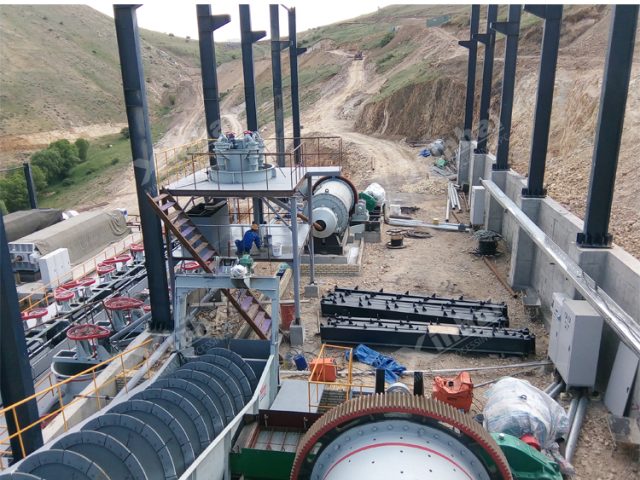
Say a mine owner asks: I’ve got silver in three different minerals, which silver extraction process do I choose? Start with the ore. Not the flowsheet. Native silver, silver sulphides and silver locked in galena all behave differently. You can’t pick a route until you know what you’re freeing. Xinhai reports a 500 t/d silver flotation plant in Morocco using two-stage semi-closed crushing, two-stage grinding, flotation with one roughing, three scavenging and two cleaning, and two-stage dewatering, achieving 83.95% silver recovery. That’s a single data point. Not a universal answer.
How silver occurs in ore and why it changes the flowsheet
Silver rarely travels alone. It shows up as native metal. As silver sulphides like argentite and acanthite. Or as a hitchhiker inside galena. Lead, zinc, copper and silver usually occur together. They combine with sulphur or oxygen in varying percentages. That’s from the U.S. EPA’s lead ore crushing guidance. When silver is a by-product, the base metal circuit calls the shots. Recover the lead. Silver follows into a lead-silver concentrate. In a silver-dominant ore, build the flowsheet around silver. Base metals are secondary.
Grain size matters more than grade. A coarse native silver particle can be recovered by gravity. Even at a low head grade. A fine silver inclusion in pyrite may need a fine regrind. Or it’ll stay locked. So the first test isn’t silver grade. It’s the host mineral and liberation size. That determines your start. Flotation, cyanidation or gravity.
| Silver occurrence | Typical host | First route to test | Key risk |
|---|---|---|---|
| Native silver | Free grains in quartz or calcite veins | Gravity, then cyanidation or smelting | Overgrinding flattens malleable silver |
| Silver sulphides | Argentite, acanthite in sulphide veins | Flotation to a silver concentrate | Fine locking demands regrind |
| Silver in galena | Lead sulphide lattice and inclusions | Flotation to a lead-silver concentrate | Payable terms set by smelter |
| By-product silver in copper or zinc | Chalcopyrite or sphalerite | Base metal flotation, silver follows | Silver credit depends on refinery recovery |
Flotation: the workhorse for silver-bearing sulphides
If your silver sits in galena or another sulphide, flotation is usually the first answer. Float a lead-silver concentrate. Leave the gangue in the tailings. Circuit logic is simple. Rougher makes a fast, low-grade concentrate. Scavengers pull remaining silver minerals. Cleaners upgrade rougher concentrate by rejecting locked waste. That arrangement gives you room to adjust. No need to rebuild the plant.
Reagents do half the work. Xanthate collectors attach to sulphide surfaces. Simple. Zinc sulphate and cyanide can depress sphalerite. Yes. Lime controls pH and pyrite. But grind is the real recovery lever. Trust that. If silver minerals are locked in galena at 20 microns, a 150 micron grind won’t free them. Regrind the rougher concentrate. Not the whole feed. That saves power. And reduces sliming. Run a locked cycle test before locking in the grind size.
For a small lead-silver plant, the full flowsheet discussion belongs on our lead-silver processing plant page. You’ll also find broader silver route options on silver processing.
Cyanide leaching and Merrill-Crowe for high-silver oxide ore
Flotation isn’t always the winner. In oxidised ores, silver chlorides, or fine free native silver, cyanide leaching can recover silver without a sulphide collector. Gold and silver aren’t soluble in water. You need a complexant like cyanide and an oxidant like oxygen. That’s the chemistry in one sentence. The Cyanide Code puts typical leaching solutions at 300 to 500 mg/l as NaCN, depending on mineralogy. Don’t treat those as a recipe. They’re a starting range for testwork.
Once silver is in solution, pull it out. For high-silver solutions, Merrill-Crowe zinc precipitation beats carbon adsorption. Silver loads poorly on activated carbon. Elution is slow. Zinc dust precipitation handles high silver tenors. It gives a metallic precipitate you can smelt. The trade-off? Filtration and deaeration. Merrill-Crowe needs clear, oxygen-free solution. Add clarification and vacuum deaeration. If your ore has lots of clay or sulphide, cyanide consumption may climb. Test acid consumption and preg-robbing early.
Many silver plants combine leaching with flotation or gravity. Gold plants use the same Merrill-Crowe circuit. Equipment overlap is large. See gold extraction equipment for the main unit operations.
Gravity recovery for coarse native silver
Native silver is soft and dense. A ball mill won’t just grind it. It’ll flatten it. Flattened silver reports to tails. Or floats unpredictably. If you see visible native silver, put gravity in early. A jig or spiral after the crusher catches coarse grains before the mill. A shaking table or centrifugal concentrator in grinding pulls the next size fraction. The goal isn’t final concentrate. It’s removing coarse silver before smearing.
Gravity concentrate can be smelted, leached or sold. It cuts flotation load and silver loss to slimes. Gravity alone rarely gets all the silver. Most plants run gravity before flotation. Sometimes cyanidation follows.
Worked example: a 500 t/d silver flotation plant
The Morocco example mentioned at the start is worth unpacking. Xinhai reports a 500 t/d silver flotation plant using two-stage semi-closed crushing, two-stage grinding, flotation with one roughing, three scavenging and two cleaning, and two-stage dewatering, achieving 83.95% silver recovery. That’s a real benchmark. But it’s tied to a specific ore. Two-stage semi-closed crushing means screening the product. Oversize returns. Mill feed is controlled. Two-stage grinding means primary mill then regrind or secondary mill. Often to hit liberation size.
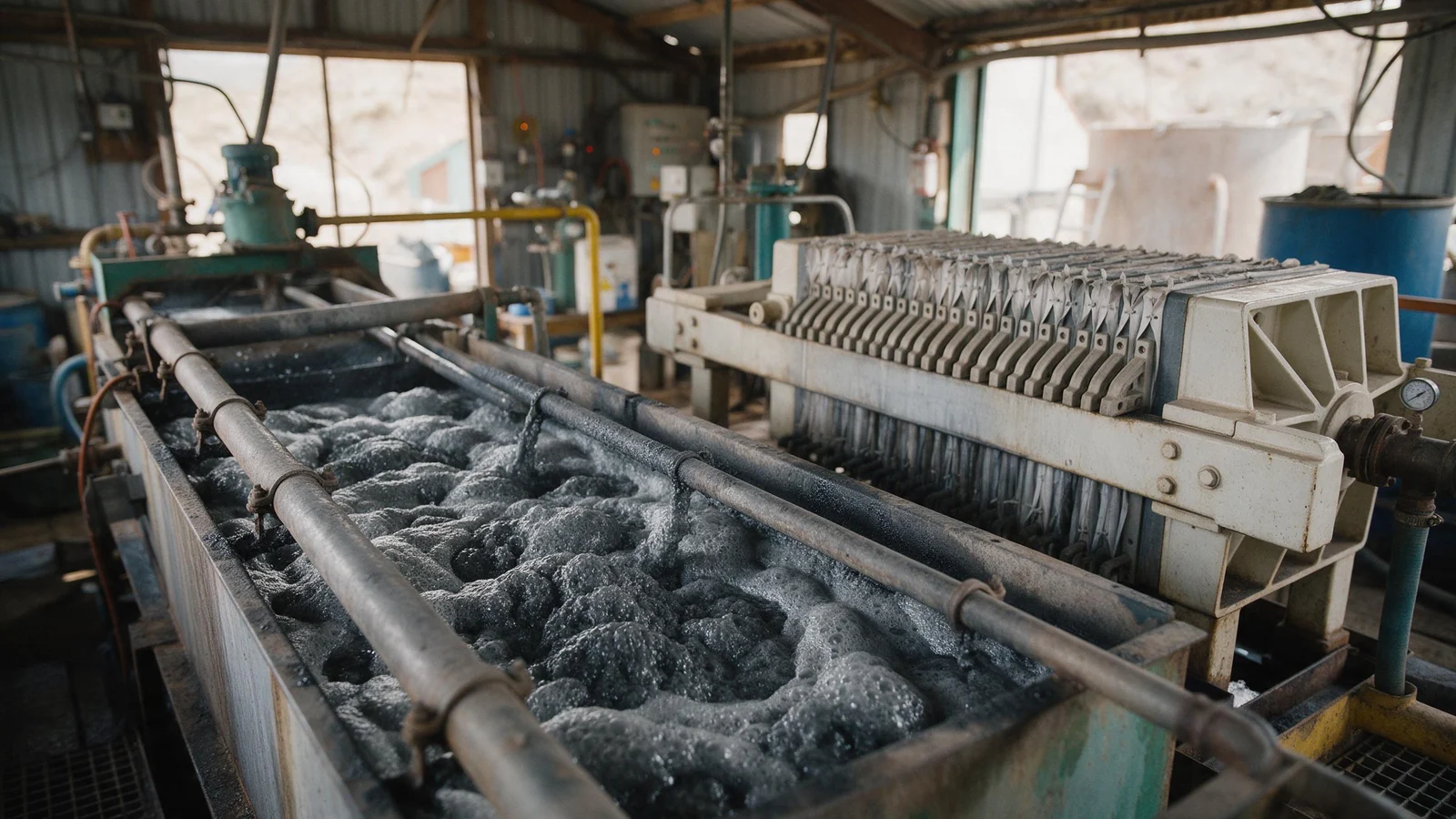
The flotation circuit is classic. Rough once. Scavenge three times. Clean twice. That gives long scavenging residence. Final concentrate grade stays high. Two-stage dewatering, thickening then filtration, gives a transportable concentrate. Smelter accepts the moisture. Different ore? Different numbers. Don’t copy the flowsheet. Copy the testwork structure.
For a deeper look at the silver-specific route, start with the silver processing page and the lead-silver processing plant page.
Separating silver from gold at the refinery stage
When doré reaches a refinery, mineral processing is over. Extraction isn’t. Doré is a gold-silver alloy with base metals. Classic separation? Nitric acid parting. Nitric acid dissolves silver. Gold stays as residue. If doré is gold-rich, adjust the bullion first. Refiners call it inquartation. Silver goes into solution as silver nitrate. Recover it by cementation or electrolysis. Electrolytic refining uses impure silver anode in silver nitrate electrolyte. Pure silver plates on the cathode. Gold and other metals fall to anode slimes. Recovered separately.
Route depends on doré composition. Fire assay is the referee. ASTM E2294-21 covers proof silver corrections in metal bearing ores and concentrates by fire assay gravimetry. Ask your refinery to report against that standard. Not just total silver.
What to prepare before you ask for a silver plant design
You wouldn’t ask a tailor for a suit without measurements. Don’t ask an engineer for a plant without samples. A plant design needs representative samples from each ore type. Not a single grab. Get a full assay suite. Silver, gold, copper, lead, zinc, iron, sulphur, arsenic, antimony. Need mineralogy, liberation size and a Bond work index. If you have a resource estimate, the JORC Code sets out the recommended minimum standards for public reporting of exploration results, mineral resources and ore reserves in Australasia. Use it to structure what you give the engineer. It helps.
Then define target throughput, product spec, and tailings constraint. Sell a concentrate or doré? Is there a smelter with payable silver terms? What about water and power? Those answers change the flowsheet more than a lab recovery curve. One actual checklist to bring:
- Representative samples from each ore type, with enough mass for locked cycle tests
- Full multi-element assays and silver mineralogy
- Liberation size and Bond work index
- Target throughput and product specification
- Tailings, water, power and environmental constraints
When you’re shortlisting a plant builder, ask for ISO 9001:2015, ISO 14001:2015 and ISO 45001:2018 certificates. Xinhai holds these three. That’s a minimum for quality, environment and health systems. Not a recovery guarantee. Testwork is the guarantee. If anything is.
Frequently Asked Questions
Is silver harder to extract than gold?
Not inherently. It depends on host mineral and liberation size. Not the metal itself. Gold often occurs as free native metal. Dissolves readily in cyanide. Silver frequently sits in galena or as sulphides. Needs flotation first. Some native silver is free. Easy to gravity recover. Difficulty is ore-specific. Not element-specific.
What is the 80/50 rule for silver?
The 80/50 rule is shorthand some operators quote. It isn't in our verified sources. Shouldn't drive a flowsheet decision. What matters is the recovery-versus-grind curve. If liberation needs a finer grind to move from 60% to 83% recovery, testwork shows that tradeoff. Ask for a recovery-versus-grind curve. Not a rule of thumb.
How is silver extracted from its ore step by step?
Usual sequence? Sample and mineralogy first. Then crushing and grinding to liberation size. After that, concentrate silver by flotation, gravity or cyanide leaching. Depending on the mineral. Concentrate is dewatered. Then smelted or refined into doré or bullion. Refining separates silver from gold and base metals. Each step follows from mineralogy.
How is silver extracted from lead-zinc-copper associated ore?
In lead-zinc-copper ore, silver rides with base metals. Flotation makes a lead-silver concentrate. Smelter pays for silver. Copper and zinc circuits recover a share of by-product silver. Don't chase silver standalone in these ores. Recover base metal economically. Ensure silver reports with concentrate that gives best payable terms.