A jaw crusher for sale can be a smart purchase new or used, but the real risk hides in frame condition and toggle wear. Used units need a documented inspection of the swing jaw pivot, pitman play, and bearing housings. New crushers make sense when you need long life and a matched circuit.
Searching for a jaw crusher for sale puts you in a strange market. Most online listings come from dealers pushing used iron, not engineers explaining what actually breaks. If you’re a mine owner or procurement manager, you don’t need a price tag. You need to know where the money goes after the purchase. A jaw crusher is not a commodity. The frame carries every stress, the toggle plate protects the drive, and the eccentric shaft transmits fatigue into the bearings. New or used, the machine either matches your circuit or it becomes a bottleneck. We’ll walk through what changes your total cost, what to inspect in a used unit, and the questions that expose a bad seller.
New vs Used: What Actually Changes Your Total Cost
A jaw crusher is a compression machine. It crushes rock between a fixed jaw and a moving jaw that swings on an eccentric shaft. The reduction ratio is typically 4:1 to 9:1, meaning a 200 mm feed can produce a 25–50 mm product. Metso’s jaw crusher technical pages describe this geometry and the components that wear. You can replace liners, bearings, and drive belts. Those are consumables. You cannot cheaply fix a cracked frame, a bent pitman, or a worn toggle seat. That’s the real cost difference.
When you buy new, you pay for a frame with zero fatigue cycles. When you buy used, you pay for the unknown. A used jaw crusher may have been run hard in abrasive granite, or it may have been babied in soft limestone. The price difference often looks attractive until you factor in the rebuild. A set of main bearings for a mid-size crusher can cost thousands of dollars, but the labour to replace them on-site can double that. Frame cracks require welding, stress relieving, and usually a new alignment. Toggle plates are cheap, but a worn toggle seat means the plate won’t seat correctly and will fail repeatedly. That’s the hidden total cost: you don’t pay for the machine, you pay for the downtime.
Used Jaw Crusher Inspection Checklist
Never buy a used jaw crusher without a physical inspection. Follow this ordered checklist, and if the seller won’t let you perform it, walk away.
- Frame cracks around the swing jaw pivot. Clean the paint. Use dye penetrant or magnetic particle testing on both sides of the pivot boss. Any crack here is a structural failure waiting to happen.
- Pitman and eccentric shaft play. Pry the pitman sideways with a bar. Excessive lateral movement means worn bronze bushings or a loose keyway. The shaft itself should show no scoring or heat discolouration.
- Bearing housing condition. Remove the dust covers. Look for pitting, spalling, or signs of water ingress. If the grease looks milky, moisture has entered.
- Toggle seat wear. The toggle plate sits between the pitman and the frame. The seats should be flat, not grooved or rounded. A worn seat will eat toggle plates.
- Adjustment mechanism function. Operate the discharge opening adjustment through its full range. It should move smoothly without binding. Hydraulic shims or wedge systems often seize if neglected.
- Frame welds and repairs. Look for any weld beads that weren’t factory. Repaired sections can hide cracks underneath. Ask for X-ray or ultrasonic documentation if repairs are present.
Take photos, record serial numbers, and compare the inspection notes with maintenance logs. 911 Metallurgist’s working principle guide shows the internal geometry so you can identify each part during the inspection. Don’t skip the swing jaw pivot. It’s the highest stress point, and cracks there are the most common reason a used crusher gets scrapped.
Spare Parts Availability and the Orphan Machine Problem
An orphan machine is a used jaw crusher whose original manufacturer no longer supports the model, or whose parts aren’t interchangeable with widely available designs. That’s a procurement nightmare. You might save 40% on the purchase price and then spend 200% over five years on custom machining and expedited freight. Liners wear out. Toggle plates break. Eccentric shaft bearings need replacement at scheduled intervals. If you can’t get those parts off the shelf, the crusher sits idle.
Before any offer, check the parts market. Call two or three independent suppliers and ask for a quote on a toggle plate and a set of jaw liners for that specific model. If the supplier asks “what serial number?” and then goes silent, that’s your answer. Common brands like Metso, Sandvik, and Terex have broad aftermarket support. Obscure or discontinued models don’t. Ask the seller for a list of all parts they’ve replaced in the last two years, and who supplied them. A machine with a single source for parts is a risk you don’t need.
Documentation to Demand Before You Buy
A documentation packet is the set of technical files that prove the crusher’s design, operational limits, and maintenance history. Don’t buy a used jaw crusher without these documents:
- Manuals. Installation, operation, and maintenance manuals for the exact model and serial number. Not a photocopy from a similar machine.
- Drawings. General arrangement drawings showing dimensions, mass, and foundation loads. Assembly drawings for the pitman, eccentric shaft, and toggle mechanism.
- Wear part catalogue. A complete list of every replaceable component by part number, drawing reference, and material specification. This becomes your spare parts shopping list.
- Load test records. If the crusher was rebuilt or commissioned, ask for the factory load test report. It should show vibration levels, bearing temperatures, and power draw at rated capacity.
Manual drawings are often lost when a crusher passes through three owners. A seller who can’t produce them is asking you to take on undocumented risk. Walk away unless the price reflects that ignorance. A complete documentation packet costs nothing extra but saves you thousands in avoided assembly errors.
When a New Jaw Crusher Is Clearly Right
New is not always better, but it’s clearly right in three situations. First, when your production life exceeds five years. A new crusher typically carries a 12-month warranty or more, and its frame has no accumulated fatigue cycles. That warranty shifts the early failure risk back to the manufacturer. Second, when you’re building a matched circuit. A new crusher can be sized to the exact feed gradation, downstream screen, and conveyor capacity. Used crushers often come with the wrong motor or an undersized flywheel. Third, when downtime costs more than the price difference. If your plant loses $5,000 per hour of unplanned stoppage, assume a used machine will have two extra unplanned outages in the first year. That’s likely more than the premium for new.
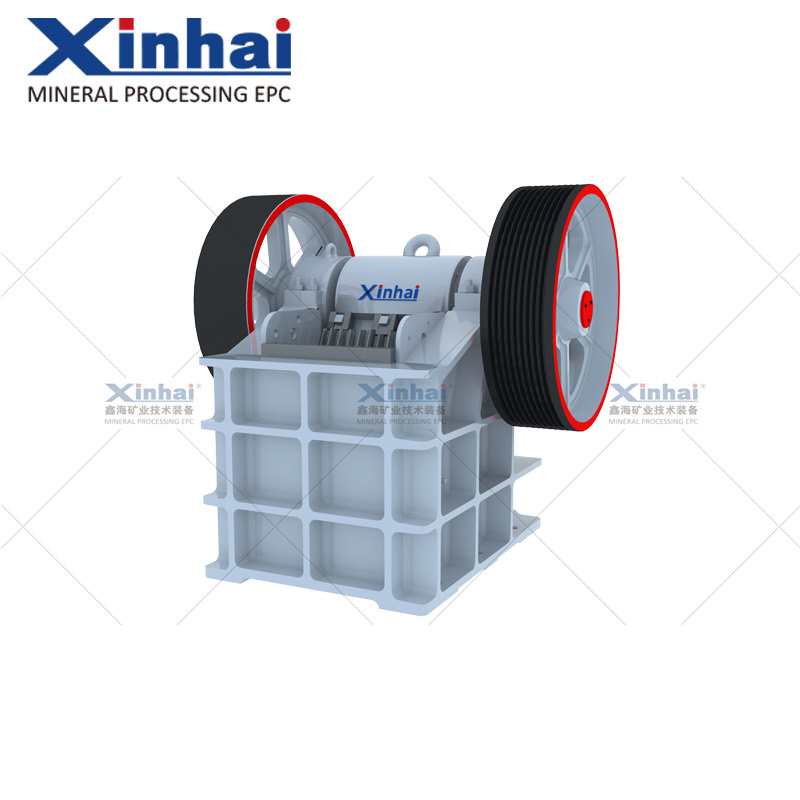
Xinhai offers PE jaw crushers as part of a complete crushing circuit. The company’s engineering team sizes the crusher to your ore, not the other way around. For procurement buyers who need long-term reliability and a single accountable vendor, new is often the cheaper choice over the asset’s life.
Questions to Ask Any Seller
Seller transparency is the willingness to provide a serial number, maintenance logs, and a third-party inspection report. These questions filter out the dishonest ones:
- What is the crusher’s total operating hours? (If they don’t know, assume high.)
- What was the primary feed material? Abrasive granite causes more wear than soft limestone.
- When were the main bearings last replaced, and by whom?
- Can you provide the original manuals and drawings?
- Has the frame ever been welded? If yes, where and when?
- Why is the machine being sold? “Upgrading” is fine; “we don’t need it anymore” is often a cover for a recurring problem.
- Will you allow a third-party inspection at our expense? If they refuse, that’s a red flag.
Don’t negotiate price until you have answers. A seller who stalls on documentation usually has something to hide. Remember: the cheapest jaw crusher for sale is often the most expensive one to operate.
If you’re comparing options, consult our crushing equipment guide or contact our engineers for a technical review. Xinhai reports more than 600 EPC+M+O projects according to the company’s published figures. The company also reports serving mines in more than 100 countries and regions.
Frequently Asked Questions
What is the biggest risk when buying a used jaw crusher?
Frame cracks around the swing jaw pivot. This area carries huge fatigue loads, and a hidden crack can cause sudden failure. Always inspect with dye penetrant or magnetic particle testing.
Which parts of a jaw crusher are consumable, and which are structural?
Liners, toggle plates, and bearings are consumable and can be replaced. The frame, pitman, and eccentric shaft are structural; damage to these is often uneconomical to repair.
What documentation should a used jaw crusher come with?
Manuals, general arrangement drawings, a wear part catalogue, and any load test or rebuild records. Missing documentation often hides poor maintenance or unrecorded repairs.
When is it better to buy a new jaw crusher instead of used?
When your production life exceeds five years, you need a precisely matched circuit, or downtime is very expensive. A new crusher has no fatigue history and usually includes a warranty.