The mill feed determines the mill, not the other way round.

Say a mine owner asks how to size limestone processing equipment for a new dry powder line. The answer starts with the target product fineness, not with a catalogue. You’ll need to think about the whole chain from crushed feed to classified powder. Miss any link and the mill will underperform. That’s not seller’s talk, it’s plant physics.
How Limestone Processing Works: From Quarry Stone to Fine Powder
Quarried limestone arrives as large blocks. Crushing reduces it, screening controls the top size, and drying stops the mill from choking. Fine grinding then produces the powder your buyer needs. The EPA’s AP-42 crushed stone chapter sets out the basic sequence: processing operations for crushed stone may include crushing, screening, size classification, material handling, and storage operations (EPA AP-42). That sequence doesn’t change much when you add a mill.
One thing separates a quarry operation from a powder plant. The mill feed has to be controlled. You’ll screen out oversize, blend fine and coarse, and often dry the feed before it reaches the mill. P80 is the size 80 per cent of the mass passes. You’ll set your circuit so the mill feed P80 matches the equipment’s design.
Limestone from quarry to powder is a dry process unless you want slurry for flue gas desulphurisation. The equipment chain is identical: reduce, dry, grind, classify. Every stage has to be specified together. A perfect mill behind a sloppy screen will still produce off-spec powder.
Choosing Limestone Grinding Equipment by Target Fineness
Mesh number is simply the number of wire openings per linear inch. A 200-mesh screen has openings around 74 micrometres. A 325-mesh screen is much finer, around 44 micrometres. These are definitions you can check with a sieve. Your product specification should quote a top size and a P80, not just “fine”.
Three mill types dominate dry limestone grinding. The table below is not a ranking, it’s a decision path. Your target mesh, throughput and energy cost choose the mill.
| Mill type | How it grinds | Where it fits | Selection driver |
|---|---|---|---|
| Raymond mill | Pendulum rollers grind against a ring; integral classifier controls top size | Medium-fine dry products, lower throughput | Lower initial cost, straightforward operation |
| Vertical roller mill | Rollers grind on a rotating table; hot air dries and classifies in one pass | Fine to very fine products, high throughput | Energy efficiency per tonne, integrated drying |
| Ball mill | Tumbling steel balls in a rotating shell, wet or dry | Fine products, often with a separate classifier | Flexibility, but high installed power and wear |
Final product mesh drives mill selection, not initial cost. A Raymond mill and a ball mill can both produce a 325-mesh product, but the ball mill will usually need a classifier and more power. The vertical roller mill becomes attractive when you want high tonnes and a tight top size in one machine. Bond Work Index testing, done in a lab, tells you the specific energy a mill needs. No supplier should skip that test.
Ask any mill vendor to run a Bond Work Index and grindability test on your limestone, not somebody else’s. The result changes motor size, mill diameter and liner design. If they quote a mill without testwork, walk away.
Bond’s equation uses the square root of feed size and product size, plus a work index measured in kilowatt-hours per tonne. The constant 10 comes from the test procedure. Mill power is then the specific energy times throughput, plus drive losses. It’s not a black box. Any competent mill engineer can show you the calculation on one sheet of paper.
Crushing and Screening: Preparing Limestone for the Mill
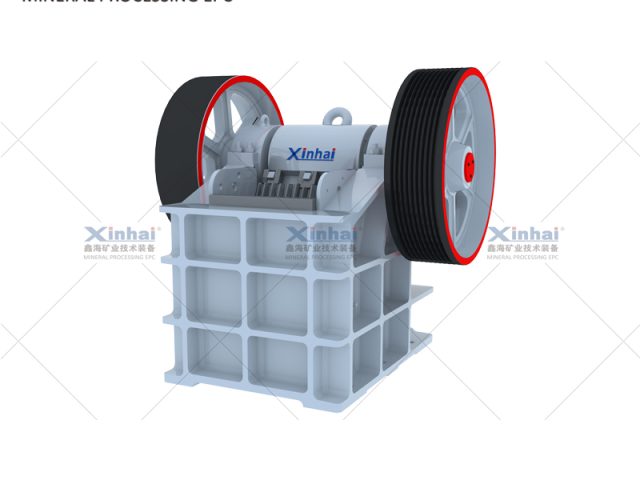
You can’t feed quarry lumps straight into a fine grinding mill. Primary jaw crushers handle the first reduction. Then cone or impact crushers take the rock down in secondary and tertiary stages. Crushing equipment should be closed-circuited with screens. Oversize returns to the crusher. That’s standard.
EPA’s crushed stone guidance notes jaw, impactor, or gyratory crushers are usually used for initial reduction. The crusher product is normally 7.5 to 30 centimetres in diameter, and cone crushers commonly reduce it to about 2.5 to 10 centimetres. You’ll pick the crusher based on feed size, hardness, moisture and throughput, not on a brochure photo.
Screen the mill feed. A top size of 15 to 20 millimetres is a common design target for many dry grinding circuits. It’s not a law of nature, but it keeps the mill charge mobile and stops tramp oversize from scouring liners. Use screening equipment with the right aperture and incline.
Drying and Moisture Control Before Fine Grinding
Wet limestone will paste up inside a dry mill. It coats the grinding media, blocks classifier vanes and cuts capacity. Keep feed moisture below roughly 2% by weight for most air-swept mills. That’s a design value, not a universal guarantee.
You can dry before the mill with a rotary dryer, or use a hot-air swept mill that dries and grinds in one pass. The second option saves floor space but links drying performance to mill airflow. High moisture reduces mill output and increases wear. Test your feed’s moisture before you choose.
Moisture control isn’t just about avoiding paste. A little surface moisture changes how fine particles stick to the mill internals. That raises power draw and lowers throughput. You’ll see it in the ammeter before you see it in the product.
Classification, Storage and Powder Handling
A mill rarely produces the exact size distribution you want in one pass. That’s the classifier’s job. Dynamic classifiers return oversize to the mill for regrinding. Then cyclone collectors and bag filters separate the finished powder from the air stream. Classification equipment sets the top size more than the mill itself.
After the filter, the powder goes to storage silos, then to bagging or bulk loading. Enclosed handling limits dust and product loss. Design the conveying system as part of the mill line, not an afterthought.
When you need to verify fine powder top size, laser diffraction is one method. ISO 13320:2020 covers particle size analysis by laser diffraction methods. It works from about 0.1 micrometre to 3 millimetres. For non-spherical particles, the distribution differs from sieving, so compare like with like (ISO 13320:2020). That’s a good cross-check for a classifier set point.
How to Specify a Limestone Processing Line
Start with two numbers: target product fineness and tonnes per hour. Then confirm feed moisture, hardness and abrasiveness. Then treat crushing, grinding and classification as one integrated system. Use testwork to validate equipment sizing before purchase. Xinhai reports more than 600 mine EPC+M+O projects, according to the company’s published figures, so a full-scope supplier should be able to run that testwork in its own laboratory. Xinhai’s CNAS-accredited laboratory (ISO/IEC 17025) under Yantai Xinhai Mining Research & Design Co., Ltd. can perform mineral testwork and Bond Work Index testing. Neither statement is a promise of a specific limestone result.
Here’s the buyer checklist. Copy it.
- Define target P80 and top size in micrometres or mesh.
- State required dry tonnes per hour, not just annual tonnage.
- Measure feed moisture, Bond Work Index and abrasion index.
- Decide dry or wet grinding and whether drying is integrated.
- Confirm classifier type and bag filter emission limits.
- Ask for a process flow diagram and mass balance before quoting.
Then send the same brief to three suppliers. If two of them come back with different mill sizes, ask why. The difference is usually testwork and classifier selection, not magic.
For a full EPC scope, ask how the supplier manages the mineral processing EPC from testwork to commissioning. You’ll want a single point of responsibility for civil, mechanical and electrical packages.
Frequently Asked Questions
How is limestone processed?
Limestone is processed by crushing, screening, drying, fine grinding and classification. Quarried rock is crushed in stages, screened to a mill feed top size, dried if the feed moisture is too high, then ground in a mill. A classifier returns oversize for regrinding, and bag filters separate the finished powder.
Who is the largest producer of limestone in the world?
There is no single official ranking of limestone producers by company, because production data is usually reported by country and by end use, not by corporate ownership. For country-level crushed stone and lime statistics, check the USGS Mineral Commodity Summaries. Production is dominated by a number of large industrial countries, but the exact ranking changes with definitions and reporting year (USGS Crushed Stone 2025).
What equipment is used to grind limestone into powder?
Common mill types for dry limestone powder are Raymond mills, vertical roller mills and ball mills. Raymond mills suit medium-fine products with an integral classifier. Vertical roller mills combine grinding, drying and classification in one unit and are used for higher throughput. Ball mills are flexible but have high installed power and usually need a separate classifier.
How do you choose between a Raymond mill, vertical roller mill and ball mill for limestone?
Start with the target product fineness and the dry tonnes per hour you need. Then look at feed moisture, Bond Work Index and energy cost. A Raymond mill is a lower-cost option for medium-fine dry powders. A vertical roller mill is more energy efficient per tonne at high throughput and can dry wet feed during grinding. A ball mill is chosen when you need flexibility or a very fine product with a separate classifier. Testwork on your limestone should settle the choice.