

Background: a 4,000 t/d underground molybdenum mine in Hebei
Hebei, northern China. Molybdenum, 4,000 t/d, mined underground. Xinhai’s scope was C+M+O — construction, management and operation — with engineering and procurement sitting outside the contract. Our project brochures record two outcomes for it: ramp and ventilation shaft construction were accelerated, with key milestones completed ahead of schedule, and a fully mechanized development line was deployed covering drilling, mucking, ground support and ventilation. Everything below either expands those two lines or explains general underground practice.
On mines of this type, the schedule is usually governed by development metres rather than by the concentrator. Ore has to be broken, mucked and hauled at a steady rate before a plant ever sees a tonne, and the openings that make that rate possible — the ramp, the ventilation shafts, the levels driven off them — are long-lead excavation works that have to be finished before the plant can run. Slip there and the downstream dates slip with them. The plant sits idle. So does the capital.
Scope: what C+M+O covers, and what it doesn’t
Worth being precise, because this industry throws the word EPC at almost anything. This was not a turnkey mine. Xinhai held three of the five letters in EPC+M+O; the remaining two sat outside Xinhai’s contract.
Across Xinhai contracts generally, the five letters break down like this:
- E — Engineering. Ore testing, feasibility study and full-cycle mine design. Outside this contract.
- P — Procurement. Equipment manufacture and supply, packaged together. Outside this contract.
- C — Construction. Site construction, installation and commissioning works.
- M — Management. Management of the mine construction works.
- O — Operation. Production management on site. An operating scope can also carry equipment, safety, environmental, human-resource and financial management, plus testing, technical consulting, materials, spare parts, after-sales and expansion support.
The archive entry for this job is narrower than that general list. It records the outcome quoted above and nothing else: no percentage, no tonnage, no programme in days.
A construction-and-operation scope is a different commercial animal from a design-and-supply one. The obligations are people, plant and licences held on site over a long horizon, rather than documents and equipment delivered against a handful of milestones. That changes what an owner should be checking before signing: crew depth, fleet availability, maintenance capability, safety systems, and whether all of those can be kept staffed at a remote site. It also changes where the risk sits, because a contractor’s exposure is measured in shifts worked rather than in packages shipped.
That split matters if you’re comparing contractors. An owner who already has a design institute and a preferred equipment list doesn’t need to buy engineering twice. What they need is a party with the construction licences, the fleet and the crews to turn a design into metres of advance. Xinhai’s construction arm, Yantai Xinkuangfu Engineering Management Group, holds the Class-A qualification for general contracting of mine construction projects in China, along with a blasting operations qualification.
Why the ramp and the ventilation shafts get priority
On a development-led underground mine, two headings usually govern the schedule: the ramp and the ventilation shafts.
The ramp is access. Every jumbo, every loader, every truck and every crew reaches the working faces through it, and the rate it advances caps how many faces you can open at once. Ventilation is the second ceiling, and it’s the one owners tend to underestimate. On underground development, ventilation capacity generally caps how much diesel equipment can work at the same time, how fast a face clears after a blast, and therefore how many cycles a shift yields. A mechanized fleet without the air to support it is capital parked in a drift.
That is the general engineering logic behind putting excavation ahead of everything else, and it is why the recorded outcome above is framed around those two headings rather than around the plant.
A fully mechanized development cycle underground
The development line here ran mechanized end to end. Four steps, one loop, repeated shift after shift:
- Drilling. The round is set at this step. Accurate collaring and alignment keep the profile tight, which cuts overbreak — and cuts the shotcrete you’d otherwise spend fixing it.
- Mucking. Where operations quietly lose tempo. A face that’s been blasted but not cleared produces nothing at all. Underground LHD loaders pull the round and tram it to the loading point, and tramming distance is one of those unglamorous numbers that governs cycle time more than any spec sheet does.
- Ground support. Bolting and shotcrete, on a schedule rather than when somebody notices a problem.
- Ventilation. Clearing fumes fast enough that the next crew can walk in, which is what stitches the loop back to step one.
Nothing exotic in any of that. The value isn’t owning the machines; plenty of contractors own machines. It’s running four steps as one cycle so no step ever waits on the one before it. When the loop holds, advance becomes predictable, and a predictable advance rate is what lets everything downstream be planned instead of guessed. Grade control is a separate job again, and on underground development it’s normally handled by a core drilling rig working ahead of the faces — general practice in this kind of mine, not something recorded as part of this contract. The classes of kit involved are set out across our mining equipment range.
What this means for your project
We don’t publish a percentage for this contract, because the archive records a milestone outcome rather than a rate: ramp and ventilation shaft construction accelerated, with key milestones completed ahead of schedule. On an underground mine, that is a meaningful thing to deliver, since milestones met early on the ramp and the ventilation network pull every date behind them forward too.
If your programme runs through development metres rather than through the mill, the useful question isn’t who has the smartest flowsheet. It’s who can staff, equip and sequence the underground work — and then stay on site to operate it. Xinhai reports more than 600 EPC+M+O projects across more than 100 countries, according to the company’s published figures. The mining and operating contracts inside that number, this one included, are the ones where the deliverable is metres and tonnes rather than drawings.
Downstream still matters. If the concentrator side of your project is open, start with our molybdenum processing solution, or the wider mineral processing EPC overview if you’d rather hand the whole chain to one party. Other builds sit in our project case list. Send us your orebody, your ground conditions and your target rate, and you’ll get a scope back rather than a brochure: contact our engineering team.
Frequently Asked Questions
Can you take a C+M+O scope only, or do you insist on the full EPC?
C+M+O alone is fine — that is exactly what this Hebei contract was. Engineering and procurement sat outside our scope; Xinhai took construction, management and operation. The company works through EPC, EPCM, subcontracting, joint ventures, performance-based O&M and collaborative management, so the contract shape follows what you already have in place instead of forcing you to buy things twice.
How do you set a realistic development schedule before anything is signed?
From ground conditions, opening geometry and the cycle you can genuinely sustain — advance per round, faces available at once, tramming distance, air supply — never by working backwards from a date somebody wants. We won't quote you a number of days on this page, because your rock isn't this rock. On a development-led contract the openings, not the mill, set the schedule, which is why the sequence gets priced before any date is agreed.
What does developing an underground mine at this scale cost?
There's no honest single figure, and anyone who gives you one on a website is guessing. Development cost is driven by metres of opening, rock hardness and support requirement, depth, fleet selection, and local labour and power rates. Change any one of those and the total moves a long way. We price it from your geotechnical data and mine design, and what you get back is a build-up you can interrogate line by line, not a headline number.
Who actually operates the mine day to day — your crews or ours?
That is settled inside the O scope rather than assumed. Xinhai's operation scope covers production management, together with equipment, safety, environmental, human-resource and financial management, and it can also carry testing, technical consulting, materials, spare parts, after-sales and expansion support. Which of those duties we hold and which stay with the owner is written into the contract. Where an owner wants to take the operation over progressively as their own people qualify, the handover point is written in the same way rather than left to chance.
More projects
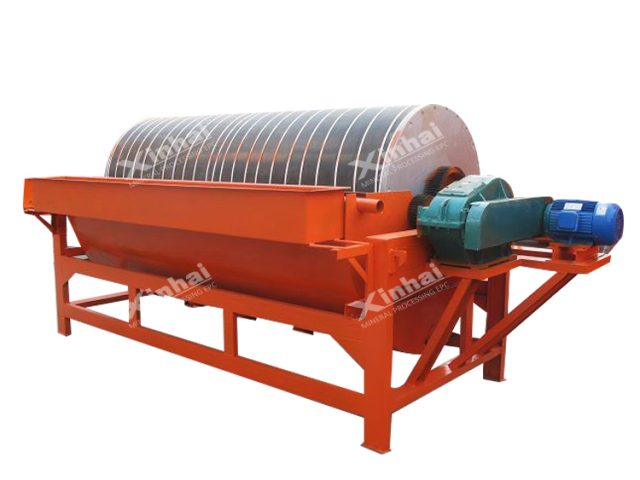
3,500 t/d Iron Ore Plant — Mongolia
Primary iron concentrate at ≥65% Fe with a yield of about 31%, plus a secondary concentrate…
Read case →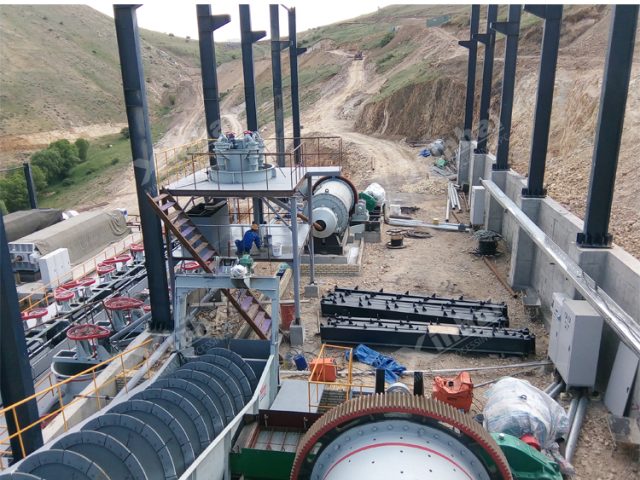
2 Mt/a Spodumene Lithium Plant — Zimbabwe
Mill throughput 7.6% above design capacity, 95.7% equipment utilization, concentrate grade held above 5.5%, recovery raised…
Read case →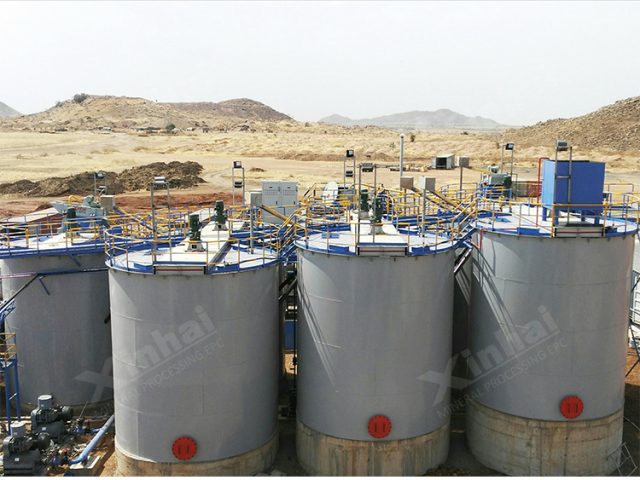
500 t/d Gold Plant — Zimbabwe
Mining and processing flow customized and optimized to the orebody to maximize resource recovery, with standardized…
Read case →