
Background: a 3,500 t/d iron project in Mongolia
Cold-climate, long-haul projects generally live or die on a number most owners underweight — not the headline concentrate grade that goes into the marketing deck, but the share of contained iron that actually leaves site as something a buyer will pay for.
Our project brochures record this project as a 3,500 t/d iron ore plant in Mongolia, delivered under an EPC+O scope. Xinhai engineered it, supplied it, built it, then stayed on to run it. Two products are recorded against it: a primary iron concentrate at 65% Fe or better, at a yield of about 31%, and a secondary concentrate grading 50-60% Fe.
- Country — Mongolia
- Ore — Iron
- Capacity — 3,500 t/d
- Scope — EPC+O: engineering, procurement and construction, plus operation
- Recorded outcome — primary concentrate at 65% Fe or better, yield about 31%; secondary concentrate at 50-60% Fe
Two concentrate products are recorded against this plant instead of one. That is the shape of the flowsheet.
Scope: what the EPC+O contract covered
EPC is engineering, procurement and construction. The O is what changes the relationship. Under an EPC-only deal you get keys, a manual and a handshake, and whatever the orebody does next is your problem. Under EPC+O, the people who drew the flowsheet are the same people standing in front of the separators when the feed changes.
Here is what each letter covers in Xinhai’s delivery model:
- E — Engineering. Ore test work, feasibility study, and mine design across the full cycle.
- P — Procurement. Equipment manufacture and packaging, out of Xinhai’s own production base rather than a purchasing desk.
- C — Construction. Site construction, installation and commissioning.
- O — Operation. Production management, and alongside it equipment, safety, environmental and human-resource management on site.
Design on a concentrator has to move on every discipline at once — mineral processing, civil, electrical, automation, water, tailings, general layout. Xinhai’s design institute reports 17 disciplines integrated under one roof, which matters more than it sounds. A process drawing that disagrees with the structural drawing is where schedules quietly die. Want the mechanics of how the delivery model is assembled? Our mineral processing EPC page walks through each stage.
Xinhai reports more than 600 EPC+M+O projects across 100+ countries, according to the company’s published figures. This one sits in the operating side of that portfolio — the projects where our people never left.
Why a second concentrate is worth designing in
Chase a single premium product and you make a quiet trade on every shift. Push the cleaner circuit hard enough to hold a high-grade spec, and the material that just misses the cut — locked grains, middlings, particles that needed one more pass — goes over the tailings launder. That is iron already paid for through drilling, blasting, hauling, crushing and grinding.
A dual-product flowsheet gives that material somewhere else to go. Alongside the primary concentrate, the second product at 50-60% Fe carries the kind of stream a single-product design would have sent to the tailings dam. In general terms, mining and grinding cost for middlings is already sunk by the time that material reaches the cleaner tails, which is why a second, lower-grade product is worth pricing at design stage. Whether it pays on any given deposit depends on your buyers and freight.
There is a second effect, less obvious and arguably more valuable. Giving near-spec material somewhere to go takes pressure off the primary circuit. Operators can tune the cleaners for grade instead of nursing them to protect recovery. Two products, two targets — rather than one circuit asked to do both jobs and doing neither one well.
How the flowsheet gets decided
No one should be sold a flowsheet before their ore has been tested. Iron minerals behave differently depending on what they are and how tightly they are locked. Magnetite answers to a magnetic field; weakly magnetic iron minerals often shrug at it. The grind size at which iron separates cleanly from gangue is a property of your deposit, not of an equipment catalogue. Xinhai reports roughly 200 mineral processing test programmes a year across 70+ ore types, run through a CNAS-accredited laboratory backed by a pilot-scale facility.
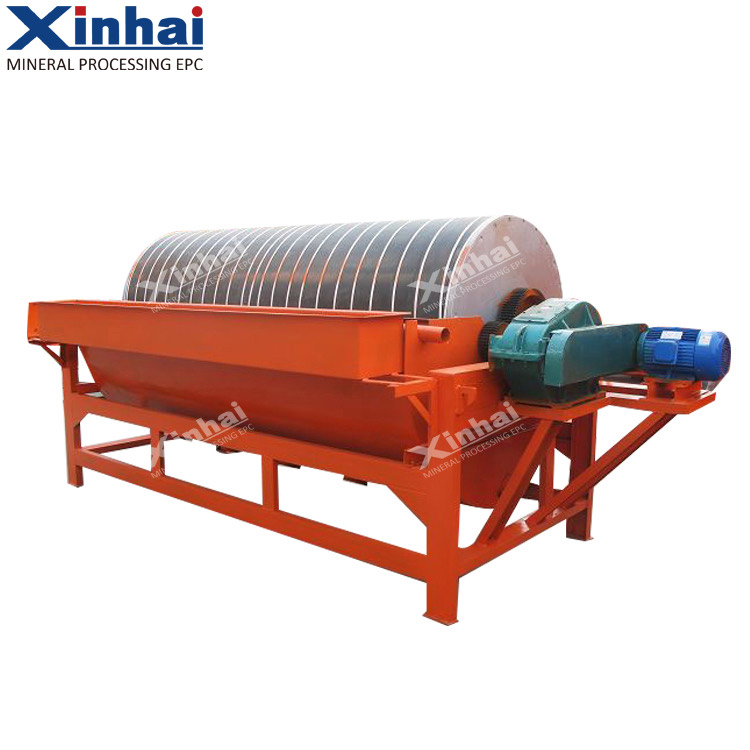
Test work fixes the liberation size. Liberation size fixes the grinding circuit. The grinding circuit fixes your power bill for the life of the plant, so it is worth getting right on a bench before it is poured in concrete. Grinding normally runs in a wet ball mill closed with classification, and iron recovery from a strongly magnetic ore is handled on wet drum magnetic separators arranged in rougher, cleaner and scavenger duty. Weighing separation routes for your own deposit? Start with our note on wet versus dry magnetic separation, then read the wider process logic in our iron ore processing solution. The full equipment range sits under magnetic separation equipment.
Outcome, and why the O keeps earning
What this page states about the plant is what our project brochures record. Those two recorded grades, and the yield behind them, are the numbers to hold us to.
Now the part that never shows up in a results table. An orebody is not a constant. Head grade drifts as the pit advances, mineralogy shifts by zone, and the ratio of liberated to locked iron moves with depth. A grade-and-yield split that was correct at commissioning slowly stops being correct. Where should the cut between primary and secondary product sit next quarter — the same place it sat last quarter? Only a team watching the plant every day can answer that honestly. That continuous re-optimisation is what the O in EPC+O actually buys you.
What this means for your project
If your deposit carries iron that a single-product design would send to the tailings dam, price a second product before the flowsheet is frozen. Retrofitting a middlings circuit into a built plant is expensive and awkward; designing one in from the start costs comparatively little. The question was never whether you can hit a headline grade. It is how many tonnes of iron you sell in a year.
Browse more delivered work in our project case library, or talk to our engineers about an ore test and find out what your ore is willing to give up.
Frequently Asked Questions
How long does a plant this size take to build?
It depends on the site far more than the tonnage — access roads, power supply, permitting, any seasonal shutdown windows your site has, and how much civil work the terrain demands. Ore hardness pushes on it too, because that sets how much grinding equipment has to be manufactured and erected. We won't quote a programme before we have seen your site, and you should be wary of anyone who does. What we can give you early is the sequence: test work, then flowsheet, then design, then a schedule built around your site rather than borrowed from someone else's.
What does an iron plant at this scale cost to build?
There's no honest per-tonne rule of thumb, because two 3,500 t/d iron plants can differ by a wide margin in capital cost. Ore hardness sets the grinding power, which sets the single biggest equipment line item. Liberation size decides how many separation stages you need. Water availability, tailings storage, grid distance and how much you build on site versus ship in modules all move the number. What we can do is scope it properly: test your ore, fix the flowsheet, then price the actual equipment list. Xinhai manufactures its own equipment, so the equipment list in that budget is priced from our own production base rather than sourced through a third party.
Who trains our local operators, and what happens after handover?
Under EPC+O that question mostly goes away, because there is no cliff-edge handover. Our operations team runs the plant, and local staff learn on the equipment they will actually use, in the plant they will actually work in. Developing local staff sits inside the human-resource management part of our O scope, alongside production, equipment, safety and environmental management. If you eventually want to take the plant in-house, that groundwork is what makes the transition survivable rather than traumatic.
Is a 50-60% Fe secondary concentrate actually saleable?
That depends on your buyers and your logistics, which is why the commercial side has to be checked before you design for it. Lower-grade iron concentrate typically sells at a discount to a high-grade product, and freight distance can eat that margin on a long haul. The general argument for a second product is that by the time middlings reach the cleaner tails, the mining and grinding cost for that material has already been spent, so it is worth putting a price on at design stage rather than after commissioning. Whether it pays on any given deposit is a commercial question, not an engineering one — run the arithmetic on your own netback price and freight before committing.
Why not just push everything into one high-grade concentrate?
Because grade and yield pull against each other. Tightening the cleaner circuit to lift concentrate grade pushes more middlings out with the tailings, and every tonne of iron in that stream is a tonne you paid to mine and never sold. Splitting the output lets each circuit chase one objective. Where the split should sit isn't fixed either — it shifts as the orebody changes, which is exactly the kind of ongoing adjustment an operating contract is designed to handle.
More projects
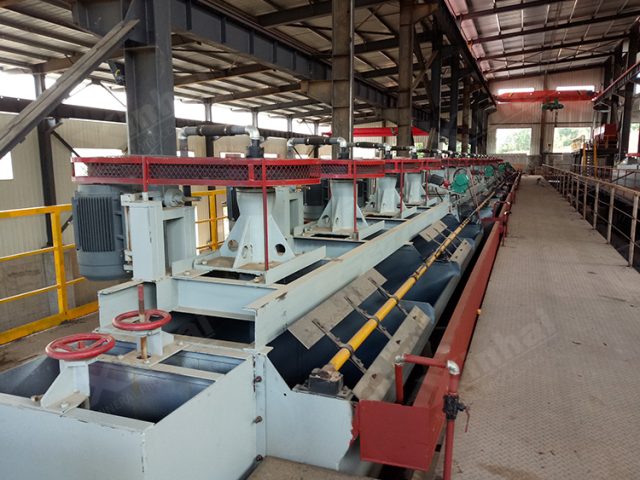
1,500 t/d Copper Plant Design — Pakistan
A design-only (E) engagement for a 1,500 t/d copper concentrator; Xinhai's recorded scope was engineering and…
Read case →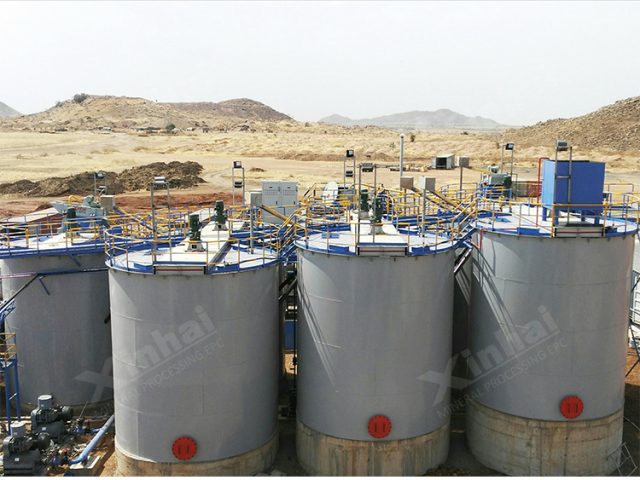
500 t/d Gold Plant — Zimbabwe
Mining and processing flow customized and optimized to the orebody to maximize resource recovery, with standardized…
Read case →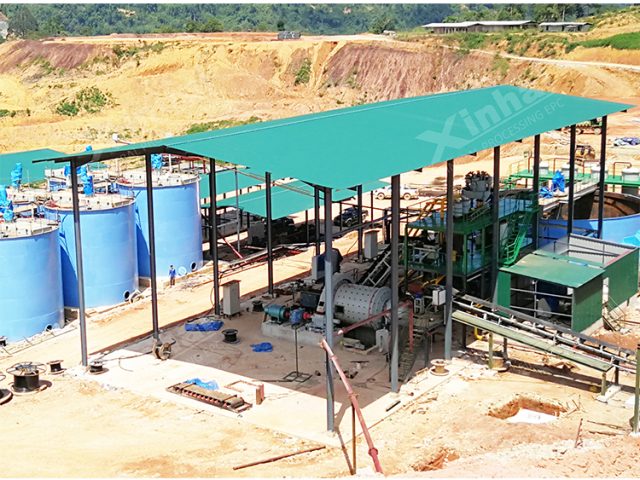
3,000 t/d Gold Plant — Guinea
On a 1.2 g/t feed grade, overall recovery has stayed steady at roughly 93%.
Read case →