
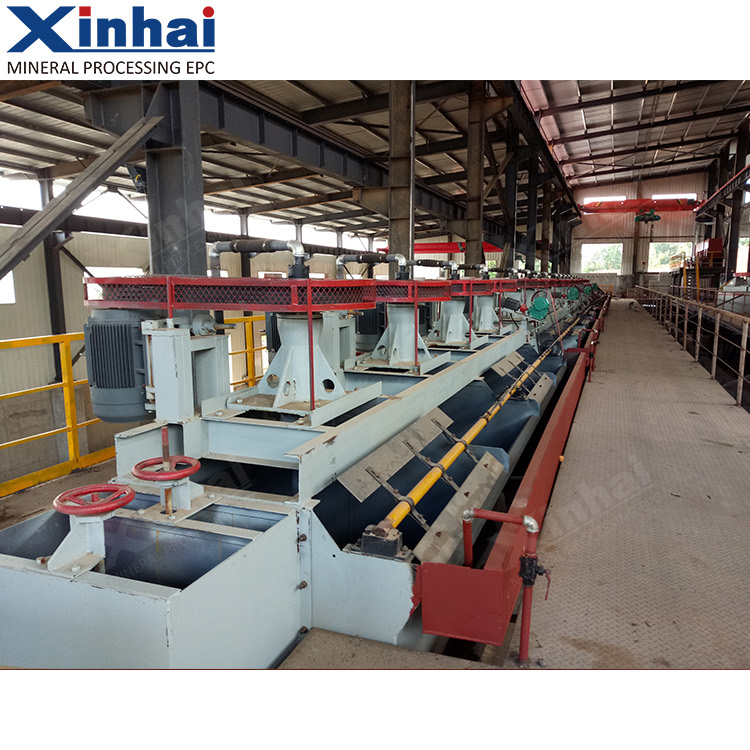
In short: Pakistan, copper, 1,500 t/d, engineering and design only. Xinhai’s mine design institute produced the plant design; procurement, construction and operation fell outside Xinhai’s scope. You will not find production figures on this page, because producing them was never part of the scope.
Background: a mid-scale copper plant, not a mega-project
This is a 1,500 t/d concentrator. Mid-scale — big enough to need a full flowsheet, small enough that every design decision shows up directly in the capital number.
Our engineering archive records the scope as engineering and design only. That shape of contract sets its own bar: the drawing set has to stand on its own, because whoever builds from it later will not have the designer on site. Foundations redrawn in the field, with concrete already poured, are the expensive version of a detail left open on paper.
Be clear about what this page is, because the rest of the site is full of build-and-operate stories and this isn’t one. Scope was E — engineering and design. No commissioning date, no recovery figure, no ramp-up curve, because producing those was not the job. What follows is about the design stage itself and what gets locked in there: an error fixed into the drawings costs far more to unwind once concrete is poured.
Scope: engineering and design (E), and nothing implied beyond it
Xinhai delivers across five links — engineering, procurement, construction, management and operation. Owners take the whole chain or any part of it. Here Xinhai’s recorded scope covers the first link only.
A design-only contract has a specific commercial shape you should understand before signing one. You keep control of the tender. The drawing set has to be complete and contractor-neutral, because someone else will price and build from it. Nothing can be left as “the supplier will confirm on site” — that phrase is where budgets go to die.
A design-only package on a copper concentrator generally has to carry:
- process design criteria, with mass and water balances
- equipment lists and duty specifications
- general layout and plant elevations
- civil and structural design
- electrical single-line drawings and control philosophy
- piping, water supply and tailings handling
- capital and operating cost work the owner’s board can actually decide on
Xinhai reports more than 600 EPC+M+O projects across 100-plus countries and regions, and more than 700 technical experts, according to the company’s published figures. On a design-only job you’re buying access to that engineering bench without taking on the construction relationship. Splitting the two decisions is also what lets an owner add procurement and construction later, once the design and the capital estimate are on the table.
How the flowsheet gets decided (and by what evidence)
A copper flowsheet is not chosen from a catalogue. It comes out of ore characterisation: how the copper minerals occur, how coarse or fine they liberate, what the gangue does to your reagents, whether there’s a payable by-product hiding in the concentrate.
That’s why design at Xinhai starts upstream of drawing. The company reports roughly 200 mineral processing test studies a year across more than 70 ore types, run through a CNAS-accredited laboratory (ISO/IEC 17025) and an industrial-scale pilot base. Grind size, reagent scheme and circuit configuration come out of test work on your own ore — never from a comparable project down the road.
Push on that a little, because the shortcut is tempting here. Two copper deposits in the same district can call for different grind sizes, different collectors, a different count of cleaner stages. Yield, grade and recovery numbers from one orebody have no predictive value for another; they describe that ore and nothing else, which is why we don’t quote another plant’s figures at you. Want the general logic? The copper ore beneficiation flowsheet walks through the standard crush-grind-float sequence, and the copper processing solution covers where the variants branch.
How a 17-discipline design institute coordinates one drawing set
Xinhai’s mine design institute integrates 17 disciplines. Mining and mineral processing lead, and the set spans disciplines including geology, civil, electrical, automation, steel structure, mine machinery, water, HVAC, tailings, piping, economics, budget, general layout and 3D design.
Why does that matter to you? Because the failures on site are rarely process failures. They’re interface failures. A thickener sized by the process engineer that the civil engineer never got a revised foundation load for. A conveyor that fouls a cable tray. A pump station drawn before anyone fixed the plant elevations, so the head calculation is wrong and the slurry pumps are undersized on day one. Each of those is small. Together they eat months.
Keeping the disciplines under one roof is a coordination decision, not a marketing one. Layout, structure and piping get resolved in a shared 3D model, so clashes can be caught on screen rather than in the field. Economics and budget sit inside the same team, which means a process change that adds a cleaner stage gets costed while the change is still cheap to reverse.
Stage gates: from study work to detailed design
Mine design runs through gates, and each gate exists so the owner can stop. Scoping and PEA test whether the concept survives contact with reality. PFS narrows the options. DFS or BFS fixes the flowsheet, the equipment duties and the capital estimate to a standard a bank will read. FEED, BED and DED then convert that into something a contractor can build from.
Handover from DFS/BFS into detailed design is where projects quietly go wrong. Study-stage equipment lists are indicative; detailed design needs vendor-certified dimensions, loads and terminal points. Split the two between firms with no continuity and someone re-does the mass balance, and the capital estimate the board approved stops matching the plant being drawn. Carrying the same discipline leads through both stages is what keeps that gap from opening.
Xinhai’s study reporting follows the JORC Code, NI 43-101 and VALMIN — the frameworks that make study documents usable in front of lenders and exchanges rather than only internally. One qualification note, stated plainly: Xinhai’s mine design institute holds a Class B design qualification in China’s metallurgical industry. That’s a Chinese credential and we don’t stretch it to cover other jurisdictions. Local licensing, permitting and statutory sign-off stay with qualified local engineers wherever your plant is built.
What this means for your project
Weighing a copper plant of similar scale? The useful takeaway isn’t the tonnage. It’s the sequence: test the ore, fix the flowsheet on evidence, then let every discipline resolve its conflicts on paper before anyone mobilises. Design is where changing your mind still costs little.
You can take a design package and tender it. You can also fold it into a wider delivery — mineral processing EPC covers how the engineering links into procurement, construction and operation when an owner wants one accountable party. Equipment-level detail for the flotation section sits under the copper flotation plant page, and other reference projects are listed under project cases.
Send us your ore data, target throughput and site constraints, and we’ll tell you what test work is needed before a flowsheet can honestly be drawn. Contact the design team.
Frequently Asked Questions
If Xinhai only does the design, who builds the plant?
You do, or a contractor you appoint. That's the point of a design-only scope: the package is written to be tendered, so it has to be complete and contractor-neutral rather than tuned to one supplier. If you later decide you'd rather hand over a single accountable party, Xinhai also delivers procurement, construction, management and operation — the company reports more than 600 EPC+M+O projects across 100-plus countries and regions in its published figures. Buying the engineering first simply leaves that decision open until the design and the capital estimate are in front of you.
How long does a design package like this take?
There's no standard number, and anyone quoting you one before seeing your data is guessing. Schedule is driven by how much reliable ore test work already exists, how many stage gates you need, and how quickly the owner's side turns around decisions at each gate. If characterisation work still has to be done, that testing sets the critical path, not the drawing. The honest sequence: agree the gates first — Scoping or PEA, PFS, DFS or BFS, then FEED through to detailed design — and put a duration against each one only after the ore data question is settled.
What will a 1,500 t/d copper plant cost to build?
We won't put a figure on it here, because a capital estimate that isn't tied to your orebody, your site and your local construction market is a number with no meaning. Costing is a design deliverable, not a preamble to one. Economics and budget disciplines sit inside the design institute and build the estimate as the flowsheet, equipment duties and layout firm up, which is why the DFS or BFS stage is where a bankable capital number appears. Anything earlier is a range for screening decisions only.
Does the design cover training our local operating team?
Not under a design-only scope. Training belongs to the operations side of the delivery chain and is contracted separately. Xinhai's project brochures record standardised training of the owner's local team as part of at least one EPC+O operating engagement; whether it falls in scope is set contract by contract, and under a design-only contract it does not. If your intention is to run the plant with a local crew from day one, say so during design — operability, maintenance access and control philosophy get drawn differently when you know who will be standing in front of the panel.
Are the design reports acceptable to international lenders?
Study documents are prepared in line with JORC, NI 43-101 and VALMIN, the reporting frameworks lenders and exchanges expect. Worth stating the boundary clearly: Xinhai's mine design institute holds a Class B design qualification in China's metallurgical industry, and that credential is Chinese. It doesn't replace local licensing. In any other jurisdiction, statutory design approval, permitting and the sign-off stamp have to come from engineers licensed there, and we work alongside them rather than around them.
More projects
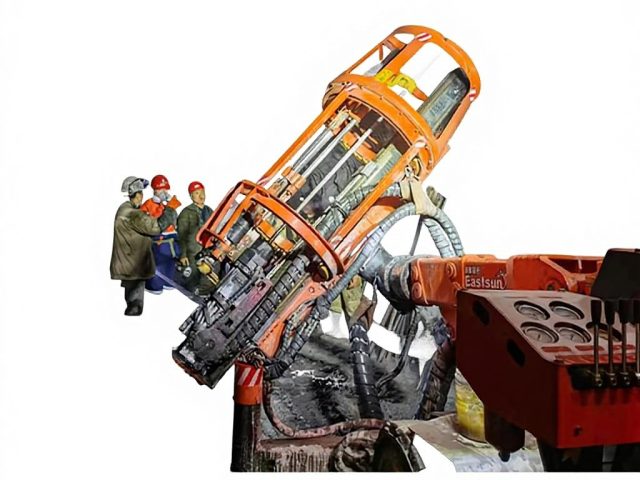
4,000 t/d Molybdenum Mine Development — Hebei, China
Ramp and ventilation shaft construction accelerated, with key milestones completed ahead of schedule behind a fully…
Read case →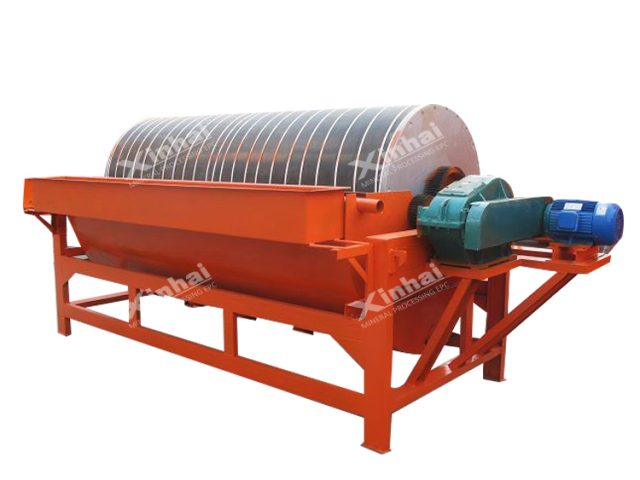
3,500 t/d Iron Ore Plant — Mongolia
Primary iron concentrate at ≥65% Fe with a yield of about 31%, plus a secondary concentrate…
Read case →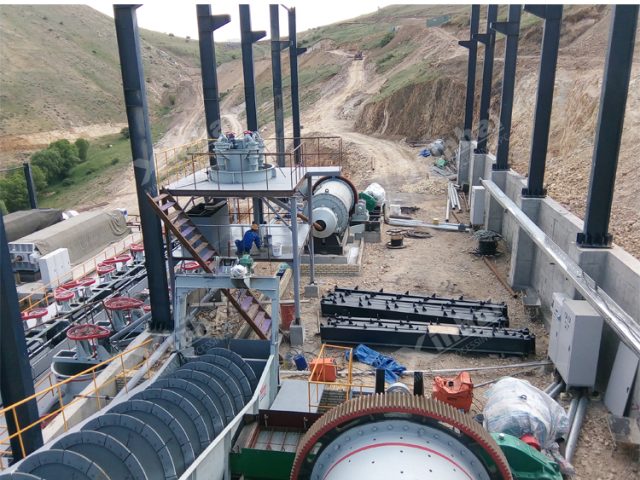
2 Mt/a Spodumene Lithium Plant — Zimbabwe
Mill throughput 7.6% above design capacity, 95.7% equipment utilization, concentrate grade held above 5.5%, recovery raised…
Read case →