
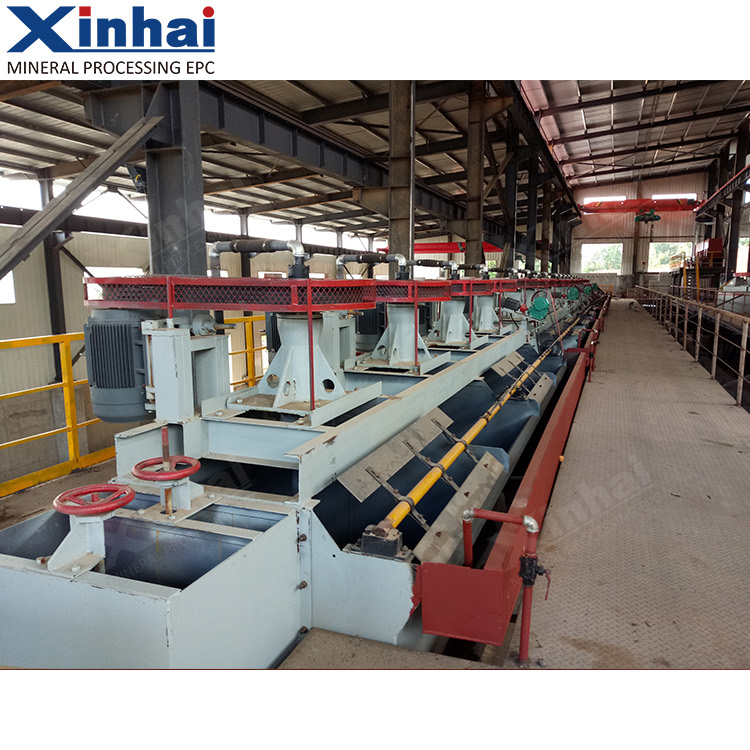
Typical process flow
- 1Crushing & screening
Three-stage crushing with jaw and cone crushers cuts run-of-mine ore down to ball mill feed size, with a screen closing each stage so oversize returns to the crusher.
- 2Grinding & classification
Ball mills run in closed circuit with hydrocyclones; the grind target comes from the liberation curve measured on your own ore sample.
- 3Rougher & scavenger flotation
Collectors, frother and lime condition the pulp; rougher and scavenger cells float a bulk copper concentrate from the slurry.
- 4Regrind & cleaner flotation
Rougher concentrate is reground and cleaned over two or three cleaner stages to reach saleable concentrate grade.
- 5Concentrate & tailings dewatering
Thickeners and filters dewater the copper concentrate to transport moisture and recover process water from tailings.
Copper starts with mineralogy, not with equipment
Ask what your copper is actually bound up in before anyone draws a flowsheet. Chalcopyrite, bornite, chalcocite and covellite float. Malachite, azurite and chrysocolla will not, at least not until the surface has been altered for them. And most deposits hand you both: a sulfide body under an oxidised cap, with a supergene enriched zone somewhere between them, and the balance shifts as the pit gets deeper.
The British Geological Survey’s copper mineral profile puts porphyry deposits at 50–60% of world copper production, with grades generally running from 0.2% to more than 1%, and records that mined copper ore generally contains 0.5–3% Cu. At one percent copper, a tonne of ore carries ten kilograms of metal and 990 kilograms of waste. You are paying to move a great deal of rock to sell a little metal, which is why two points of recovery can decide whether an operation clears its costs.
How the test programme sets the circuit
Xinhai’s research institute runs analysis, bench testing, pilot work and plant commissioning as one chain, so the metallurgist who floated your sample is available when the circuit starts up. The laboratory is CNAS-accredited to ISO/IEC 17025 and covers elemental, spectral and phase analysis. Next to it sits an industrial-scale pilot base able to run semi-continuous flotation, gravity, magnetic and hydrometallurgical circuits. Xinhai reports around 200 mineral processing test programmes a year, across more than 70 ore types.
For copper the sequence rarely changes. Mineralogy, chemical assay, density, size analysis, Bond work index. Then exploratory flotation, condition tests on grind fineness, pulp density, regulators, collector and frother, open-circuit runs, and a locked-cycle test at the end. That last one earns its cost. Middlings recirculate in a locked-cycle test the way they will in your plant, so it exposes the build-up problems an open-circuit test hides completely.
One concrete example from our engineering archive: a 1.5 Mt/a copper flotation programme for a deposit in Kazakhstan. Grind was fixed at 50% passing 200 mesh, coarser than many people expect, and the circuit settled at one rougher, two scavenger and three cleaner stages. On that sample the outcome was a copper concentrate at 3.50% yield, 16.23% Cu and 66.23% recovery. Those figures belong to that ore, that reagent suite and that flowsheet. Yours will be different, and anyone quoting you a recovery number before testing your sample is guessing.
Crushing and grinding: where the power bill lives
Comminution eats most of the electricity in a copper plant, so it gets designed first. Three-stage crushing is the usual arrangement: a PE jaw crusher on primary duty, then cone crushers on secondary and tertiary, each stage closed by a circular vibrating screen that returns oversize to the crusher. Feed arrives over a vibrating grizzly feeder that scalps fines before they ever hit the jaw. The full crushing equipment range covers each of those duties.
Grinding then runs in closed circuit: a wet ball mill classified by a hydrocyclone cluster, with a high weir spiral classifier as the alternative where a coarse sand return suits the layout better. Xinhai machines mills up to φ7 m in diameter in its own workshops and supports single-project capacity up to 50,000 t/d, so mill sizing isn’t capped by what a third-party supplier happens to stock.
Two mines a valley apart can need different grinds. Too coarse and copper stays locked inside gangue and walks out with the tailings. Too fine and you make slimes, burn power you can’t get back, and the cleaner circuit loses selectivity. The liberation curve from your own test work settles the argument. Where copper is finely disseminated, regrinding the rougher concentrate usually beats grinding the whole feed finer, since you’re only paying to grind a few percent of the tonnage.
Inside the flotation circuit
Rougher and scavenger cells pull a bulk copper concentrate using xanthate or dithiophosphate collectors with a frother, while lime lifts pulp alkalinity to depress pyrite and other iron sulfides. Dosing points matter as much as dosing rate: splitting collector between the rougher head and the scavengers normally buys recovery without dragging pyrite into the concentrate. Rougher concentrate is reground, then cleaned. In the Kazakh programme above that took three cleaner stages; plenty of ores settle at two.
Cell selection follows duty. Self-aspirating mechanical machines suit conditioning and roughing in small and mid-size plants; forced-air mechanical cells take over at scale; coarse-particle cells handle a heavy, fast-settling feed; and columns sharpen final concentrate grade where the last point of grade is worth paying for. Xinhai builds single flotation cells up to 320 m³, and its JJF flotation machine is a common cleaner-circuit choice. The packaged copper flotation plant integrates conditioning, rougher, scavenger and cleaner banks, while the broader flotation equipment line runs from pilot cells up to large mechanical units. Our guide to the copper ore beneficiation flowsheet goes further into reagent selection.
Wear parts deserve their own line in the budget. Impellers, stators, launder linings and slurry pump wet ends get chosen against the abrasiveness of the ground ore, because unplanned change-outs cost more availability than most operators allow for. Where molybdenum reports with the copper, the standard route is a bulk Cu–Mo float followed by selective separation, which our molybdenum processing page covers in detail.
Oxide and mixed ore need a different answer
Oxide copper won’t respond to a sulfide collector. Sulfidization with sodium hydrosulfide gives the mineral surface something the collector can grip, and fatty acid or chelating collectors come in where sulfidization alone underperforms. The other route is acid. BGS records that hydrometallurgy is currently used primarily for oxide ores, and Geoscience Australia sets out the standard chain in plain terms: broken ore is placed on leach pads, dissolved by a sulfuric acid solution, and the copper-rich solution goes to solvent extraction and then electrowinning, producing cathode at 99.99% copper.
Mixed ore usually runs sequentially: float the sulfide fraction first, then sulfidize and float the oxide fraction, or send the oxide portion to leaching. The direction of the trade is straightforward even when the crossover point is not. As the oxide fraction of the copper rises, sulfidization reagent consumption climbs and flotation recovery falls, which pushes the case towards leaching. As carbonate and other acid-consuming gangue rises, reagent cost on the leach side climbs and the case swings back to flotation. Cheap local sulfuric acid moves that line one way; cheap power and a smelter within reasonable freight distance move it the other.
Concentrate, water and tailings
Flotation concentrate leaves the cells as a dilute slurry and has to reach transport moisture. Thickening comes first, then filtration on a filter press or a disc vacuum filter, chosen on cake moisture and throughput. On the tailings side a deep cone thickener recovers process water and raises underflow density before the material goes to storage or dry stacking; Xinhai manufactures thickeners up to φ100 m. Our comparison of thickeners and filter presses for tailings dewatering sets out where each fits, and the thickening and dewatering category lists the machines.
Water recycle isn’t a green talking point in copper. It’s a schedule risk. In arid districts the make-up water allocation often caps plant throughput long before the mill does, so thickener and filter duty gets sized against the water balance as well as the solids balance.
On saleable grade: BGS reports flotation copper concentrates at approximately 25–35% Cu, and Geoscience Australia gives a similar band of 25–30% Cu, occasionally as high as around 60% depending on which copper minerals are present and how they are treated. Where your concentrate lands inside that band comes out of the cleaner circuit and the penalty schedule in the smelter contract.
What Xinhai puts on the table
Founded in 1997 and headquartered in Yantai, China, Xinhai delivers copper projects as EPC+M+O: engineering, procurement and construction, plus mine management and operation. The design institute integrates 17 disciplines, from geology and mineral processing through civil, electrical, automation, tailings and general layout, and works through the study stages international financiers expect, from scoping and PEA to PFS, then DFS or BFS, followed by FEED and detailed design. Reporting is compatible with JORC, NI 43-101 and VALMIN. According to the company’s published figures, Xinhai has delivered more than 600 mine EPC+M+O projects across over 100 countries and regions.
Equipment comes out of Xinhai’s own manufacturing bases, so mill, cell and thickener sizing is settled inside one organisation and a wear-part order does not have to travel through a third-party OEM. Products carry CE marking, and the group also holds CSA (W47.1) and CWB welding certification, with ISO 9001, ISO 14001 and ISO 45001 management systems in place. For remote copper sites, modular and prefabricated construction shortens site work and cuts the skilled labour you have to mobilise. For a comparable build, see our 1,500 t/d copper plant in Pakistan, or read how the delivery model works on our mineral processing EPC page.
Send a representative sample and your head assay, and we’ll come back with test results and a flowsheet before anyone quotes you a plant. Contact us to arrange an ore test.
Sources
- British Geological Survey, Copper mineral profile, MineralsUK (2007). Supports the porphyry share of world copper production (50–60%), porphyry grades of 0.2% to more than 1%, mined ore at 0.5–3% Cu, flotation concentrate at approximately 25–35% Cu, and the statement that hydrometallurgy is currently used primarily for oxide ores.
- Geoscience Australia, Copper, Australian Mineral Facts. Supports the grind-then-float concentration description, the 25–30% Cu concentrate band (as high as approximately 60% Cu), and the heap leach to solvent extraction to electrowinning route producing 99.99% copper cathode.
Frequently Asked Questions
Will flotation work on my copper ore?
Sulfide minerals such as chalcopyrite, bornite and chalcocite float well with xanthate or dithiophosphate collectors. Oxide minerals like malachite and azurite don't, so they need sulfidization ahead of flotation or an acid leach route instead. Most deposits are a mix of the two, and the ratio changes with depth. Xinhai runs bench and pilot flotation tests to confirm which route, or which combination, suits your sample before any equipment is sized.
What concentrate grade should I plan around?
The British Geological Survey reports flotation copper concentrates at approximately 25-35% Cu, and Geoscience Australia gives a comparable 25-30% band that can reach around 60% depending on the copper minerals and the treatment route. Where your ore lands inside that range depends on liberation, reagents and how many cleaner stages the circuit carries. Grade and recovery pull against each other, so your locked-cycle test is what fixes the pair you design around.
How fine do I need to grind copper ore?
Fine enough to liberate copper from gangue, and no finer. Over-grinding wastes power and generates slimes that hurt cleaner selectivity; under-grinding leaves locked copper in the tailings. There is no universal figure. In one 1.5 Mt/a copper flotation programme in our engineering archive the grind was set at 50% passing 200 mesh, which is coarser than many buyers expect. Your own liberation curve decides the target.
Can Xinhai handle mixed oxide-sulfide copper ore?
Yes. Mixed ore is normally treated sequentially: float the sulfide fraction first, then sulfidize and float the oxide fraction, or route the oxide copper to leaching with solvent extraction and electrowinning. The split is set by metallurgical testwork, the oxidation ratio and the acid consumption of the gangue, so that both mineral fractions end up in a saleable product.
What does Xinhai deliver beyond the flowsheet?
The full EPC+M+O scope: ore testing and engineering, equipment manufactured in Xinhai's own bases, construction and installation, commissioning, and mine management or operation afterwards. Design covers 17 disciplines and reports in line with JORC, NI 43-101 and VALMIN. Xinhai's own published figures put the count at more than 600 EPC+M+O mine projects in over 100 countries and regions.
What does a copper ore processing plant typically include?
A copper ore processing plant typically includes crushing, grinding, flotation, and dewatering. Sulfide ores are crushed, ground, and floated to a concentrate. Oxide ores may require sulfidization before flotation or acid leaching with solvent extraction and electrowinning. Flowsheets are based on bench and locked-cycle test work to determine mineralogy and liberation.
Send your ore data for a flowsheet and quote
Ore type, grade, target capacity and country are enough for a first scoped reply.
Related projects
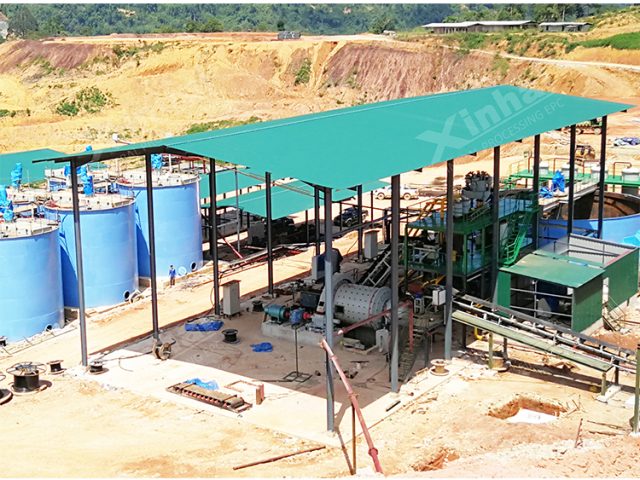
3,000 t/d Gold Plant — Guinea
On a 1.2 g/t feed grade, overall recovery has stayed steady at roughly 93%.
Read case →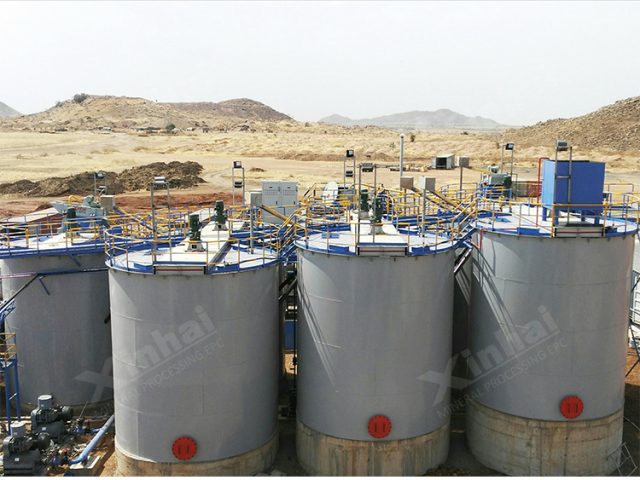
500 t/d Gold Plant — Zimbabwe
Mining and processing flow customized and optimized to the orebody to maximize resource recovery, with standardized…
Read case →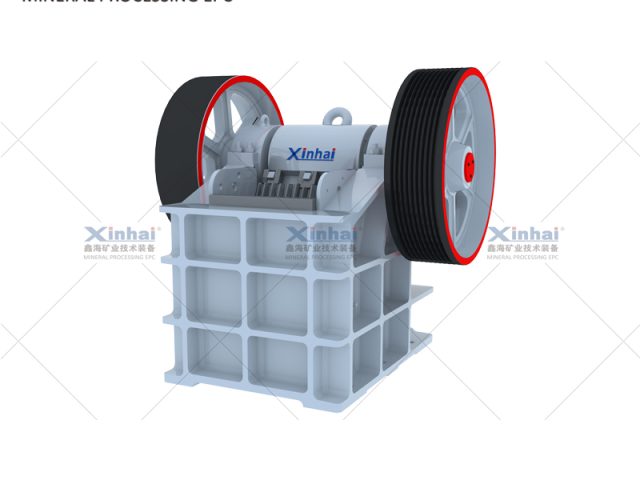
500,000 t/a Wollastonite Mining — Jiangxi, China
Standardised mining practice implemented across the operation, with ore dilution held strictly below 5%
Read case →