
Typical process flow
- 1Crushing & screening
Three-stage crushing reduces run-of-mine ore to grinding feed, with dry magnetic cobbing optional on coarse magnetite to reject waste early.
- 2Grinding & classification
Ball mills in closed circuit with classifiers or hydrocyclones liberate iron minerals, with grind fineness set by the ore.
- 3Magnetic separation
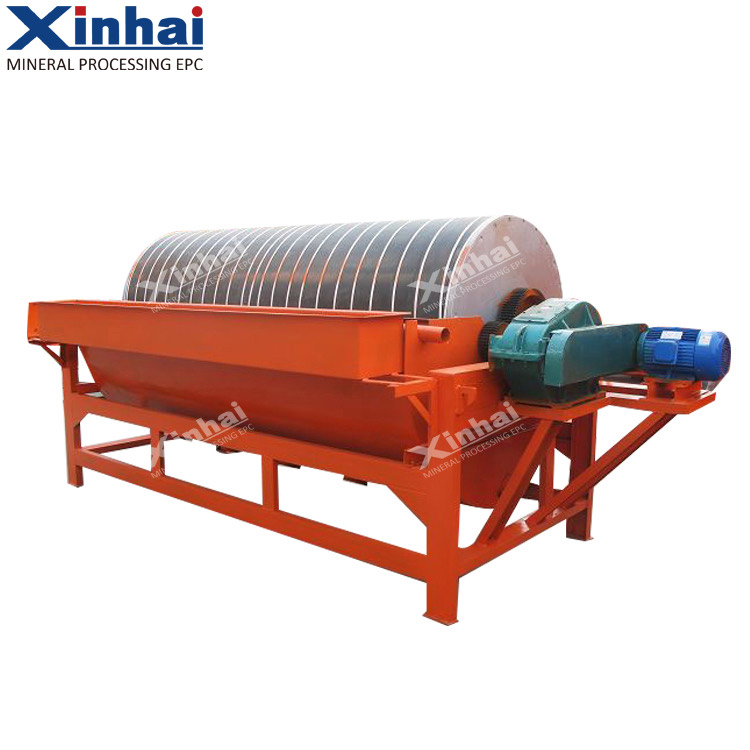
Low-intensity drum separators recover magnetite; high-intensity or wet high-gradient units recover weakly magnetic hematite.
- 4Cleaning / reverse flotation
Multi-stage magnetic cleaning, gravity or reverse flotation upgrades the concentrate and lowers silica to target grade.
- 5Concentrate dewatering & tailings
Thickeners and filters dewater the iron concentrate and recover process water; tailings are thickened for storage.
Start with how the iron is bound in the rock
Two deposits can assay the same iron grade and still need completely different plants, because what governs the flowsheet is mineralogy: which iron minerals are actually present, and how they respond to a magnetic field. Magnetite is strongly magnetic, so a low-intensity drum lifts it straight out of the pulp at low cost and with a fairly sharp cut. Hematite, goethite and limonite barely twitch in that same field. They call for high-intensity or high-gradient separation, gravity concentration, reverse flotation, or some combination of the three.
It helps to know the mineral ceiling before anyone argues about a target grade. Geoscience Australia lists the iron content of the common ore minerals as magnetite at 72% Fe, hematite at 70%, goethite at 63% and limonite up to 60%. Those are formula figures for pure minerals. A saleable concentrate sits below them because gangue never fully disappears, and closing that distance is the whole job of the beneficiation circuit.
Plenty of orebodies carry both mineral families in the same blast. Mixed magnetite-hematite ore is where budgets get uncomfortable, since you’re paying for two separation systems plus a sensible way to route middlings between them, and a plant priced off the head assay alone will usually have only one of those two cost lines in it.
The magnetite route: crush, grind, separate
The spine of a magnetite plant has been stable for decades. What changes from job to job is where the separation stages sit and how hard the mill has to work.
Run-of-mine ore drops through three-stage crushing, usually starting with a jaw crusher on the primary and closing on screens to make a consistent grinding feed. Grinding takes most of a concentrator’s power draw, so if the ore is coarse-grained and reasonably dry it’s worth putting a dry magnetic separator on the coarse fraction to cob barren rock out before it ever reaches the mill. Whether that stage pays for itself depends on how much of the waste actually reports coarse, which size-by-size testing settles.
The ore then goes into a wet ball mill closed with a high weir spiral classifier or a bank of hydrocyclones. The choice between them turns on cut size, floor space and how much fines slip through, and our note on spiral classifiers versus hydrocyclones works the comparison through in detail. Ground pulp then crosses stages of wet drum magnetic separators, with field strength, drum speed, tank style and feed density all matched to the ore in front of us. The two separators linked above are the common ones; the full Xinhai magnetic separation line also covers dry roll units, wet pre-concentrators, cleaner separators, vertical ring high-gradient machines, magnetic dewatering boxes and pulse demagnetisers, which is what lets field intensity be set stage by stage across the circuit.
Stage grinding usually beats grinding everything fine
Grinding the whole feed to final fineness in one pass is simple to draw and expensive to run. Stage grinding usually does better on magnetite: grind coarse first, pull the liberated magnetite out on an early magnetic stage, then send only the locked middlings back for regrinding. The result is that finished concentrate leaves the circuit early, already-liberated material stops being over-ground, and mill power per tonne falls.
The target fineness comes out of the liberation curve for your material, and pushing past it costs twice over, once in energy and again in slimes that foul every cleaning stage downstream. Some ores do demand a genuinely brutal grind. In a Shandong high-purity iron powder purification programme rated at 100,000 t/a, the tested route combined magnetic separation with reverse flotation at 91.4% passing 400 mesh, and returned an iron concentrate at 52.77% TFe with 48.06% recovery. Those numbers belong to that ore and that product specification; a different feed with different gangue will land somewhere else entirely.
Hematite, goethite and limonite take a harder route
Feed weakly magnetic ore to a low-intensity drum and most of the iron reports to tailings. Three techniques carry this group, often in combination: wet high-gradient magnetic separation to catch fine liberated iron minerals; gravity concentration on a spiral chute separator where there’s a workable density contrast; and reverse flotation to float silica away from the iron. Magnetising roasting, which converts weakly magnetic iron minerals into magnetic ones ahead of separation, remains a genuine option on some ores, although the fuel bill keeps it a case-by-case argument.
Dry or wet separation is a decision of its own, and it gets made too casually. Dry separation saves water and suits coarse, low-moisture feed, which is why it fits pre-concentration duty and arid sites. Wet units are sharper on fine ground material and are standard for finishing to concentrate grade. Many plants use both, with dry cobbing ahead of the mill and wet drums after it, and our guide to wet versus dry magnetic separation lays out the moisture, power and recovery trade-offs.
Deciding what concentrate grade to chase
Concentrate grade is a commercial decision that engineering then has to deliver. Chase a number your buyer pays no premium for and you’ve bought extra cleaning stages for nothing; land too low and you eat penalties on silica, alumina, phosphorus or sulphur.
The market does give you fixed reference points to aim between. The USGS quotes world iron ore prices from spot cargoes of imported fines at 62% iron content, cost, insurance and freight at Tianjin Port, China, and that’s the specification the trade is benchmarked against. Above it, Midrex reports that the preferred feed for a direct reduction plant runs 67% iron or greater, while pellets at 65% or lower are typical of blast furnace grade. Below it, for the Pilbara BIF enrichment deposits that Geoscience Australia describes, mining historically needed an average grade above 60% iron to be commercially viable, though the same source notes that some deposits can now be viable between 56% and 59% iron. Sinter feed, blast furnace pellet feed and DR pellet feed are three different products, and the number of cleaning stages you build differs for each.
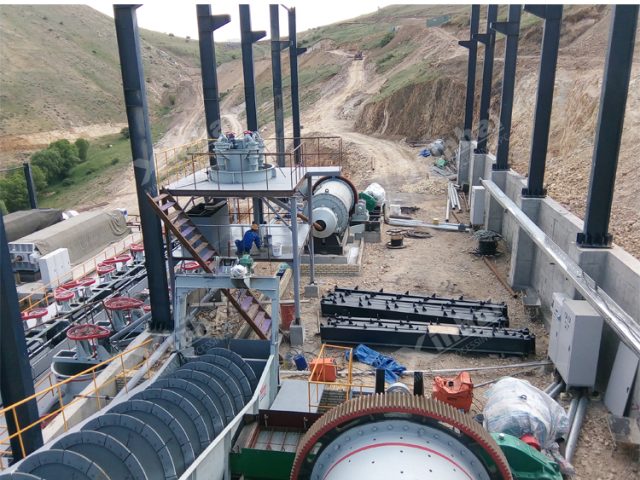
For a concrete reference, our 3,500 t/d iron ore plant in Mongolia produces an iron concentrate at 65% Fe or better with a yield of about 31%, alongside a secondary concentrate running 50-60% Fe. Whether a 50-60% stream is worth railing to port depends on the silica, alumina and phosphorus penalty schedule written into your offtake and on freight per tonne of contained iron. Price those two against each other before you decide how many cleaner stages to add, because every extra cleaning pass buys grade while shaving a little recovery.
Water, tailings and the parts nobody photographs
Iron plants are water-hungry. Concentrate leaves the last magnetic stage as slurry and has to reach transport moisture, which means thickening and then filtration on a disc vacuum filter or a filter press, depending on cake moisture targets and how the product ships. Overflow water goes back to the mill. On water-short sites that recycle loop carries real weight in permitting and in operating cost, so run the water balance before you fix the thickener count.
Tailings get the same logic in reverse: thicken hard, recover the water, reduce the volume that has to be stored behind a dam. Xinhai’s thickening and dewatering line runs from conventional units up to deep cone thickeners, and in-house manufacturing covers thickeners up to 100 m in diameter, which keeps large-tonnage circuits from being split across vendors.
What ore testing has to answer before design starts
Davis tube work measures how much of the iron is genuinely recoverable magnetically. Bench separation, size-by-size assays and liberation studies show where the iron sits and how hard it’ll be to free. Those answers set grind size, the number of cleaning stages and the grade-recovery pairing the circuit can realistically reach; a flowsheet drawn before them is guesswork.
Xinhai runs that work through a CNAS-accredited laboratory operating to ISO/IEC 17025, backed by an industrial-scale pilot base for continuous verification, and reports roughly 200 mineral processing test programmes a year across more than 70 ore types, according to the company’s published profile. The design institute pulls 17 disciplines into one team, among them geology, mining, mineral processing, civil, electrical, automation, steel structure, tailings, water, HVAC, piping, general layout, economics and budget, which is the reason the separation route, the building that houses it and the tailings facility that receives it all end up designed against one set of assumptions, worked out once, and not against three sets that separate contractors have to reconcile on site after the concrete has been poured.
Building and running the plant
Most iron projects run into trouble after the drawings are signed off, during procurement, construction and ramp-up. Under an EPC+M+O contract, with single projects supported up to 50,000 t/d, Xinhai carries ore testing, flowsheet design, equipment manufacture, construction, commissioning, and where an owner wants it, production management and operator training. Equipment comes off the company’s own lines, ball mills up to 7 m in diameter among them, which shortens the argument considerably on the day a mill and a separator disagree about who caused the problem.
And on a first-time build the contracting side deserves as much attention as the metallurgy. Xinhai reports service to more than 2,500 mines and over 600 mine EPC+M+O projects across 100-plus countries and regions, according to the company’s published figures. Iron sits inside a black-metal portfolio that also covers chromite and manganese. For the contracting structure rather than the metallurgy, start with what mineral processing EPC covers, then browse the wider solutions by ore type.
Send us a sample and a target product spec, and we’ll tell you what the ore can actually do. Talk to our engineers about an ore test.
Sources
- Geoscience Australia, Iron (Australian Mineral Facts) — iron contents of the common ore minerals, and the grades at which Pilbara BIF hematite deposits are mined commercially.
- U.S. Geological Survey, Mineral Commodity Summaries 2026: Iron Ore — the 62% Fe fines price benchmark quoted CFR Tianjin Port, China.
- Midrex, DR-Grade Iron Ore Pellets: A Supply Overview — why direct reduction plants prefer 67% Fe pellet feed over blast furnace grade.
Frequently Asked Questions
Is my iron ore magnetite or hematite?
Magnetite is strongly magnetic and is picked up by a hand magnet and by low-intensity drum separators. Hematite, goethite and limonite are only weakly magnetic and need high-gradient separation, gravity or flotation. Many orebodies contain both, sometimes in the same blast. A Davis tube plus bench separation test measures how much of the iron is magnetically recoverable and settles which route your flowsheet takes.
Should I use wet or dry magnetic separation?
Feed moisture is the first gate. Dry drum and roll separators lose efficiency once the feed is damp enough for particles to stick together and blind the discharge, so ore that cannot be dried economically usually rules the dry route out whatever its magnetic response. Wet separation removes that limit and brings a water balance with it: make-up water, thickener overflow return and tailings pond losses all have to close, which is the binding constraint on arid sites. The size boundary between a coarse pre-concentration stage and fine wet cleaning comes out of size-by-size magnetic testing on your own ore, which shows at which fraction the iron is liberated enough to reject waste without losing values.
What iron concentrate grade can I expect?
That depends on liberation, gangue mineralogy and the specification your buyer pays for. Sinter feed, blast furnace pellet feed and direct-reduction pellet feed are three different targets, and each one implies a different number of cleaning stages. Rather than quote a range up front, Xinhai runs an ore test, builds the grade-recovery curve for your material, and designs the cleaning circuit against the product you actually intend to sell.
Can Xinhai supply a complete iron ore plant?
Yes. Under the EPC+M+O model the scope covers ore testing and flowsheet design, in-house manufacture of crushers, mills, classifiers, magnetic separators, thickeners and filters, site construction and commissioning, and operator training. Production management can be added where an owner wants the plant run rather than just built. Single projects are supported up to 50,000 t/d.
Send your ore data for a flowsheet and quote
Ore type, grade, target capacity and country are enough for a first scoped reply.
Related projects
2 Mt/a Spodumene Lithium Plant — Zimbabwe
Mill throughput 7.6% above design capacity, 95.7% equipment utilization, concentrate grade held above 5.5%, recovery raised…
Read case →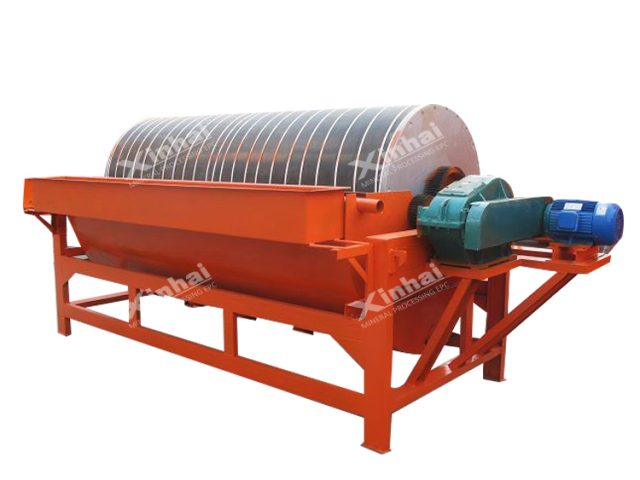
3,500 t/d Iron Ore Plant — Mongolia
Primary iron concentrate at ≥65% Fe with a yield of about 31%, plus a secondary concentrate…
Read case →
1,500 t/d Copper Plant Design — Pakistan
A design-only (E) engagement for a 1,500 t/d copper concentrator; Xinhai's recorded scope was engineering and…
Read case →